When purchasing a large 5 axis CNC router, many manufacturers start by comparing spindle power, working size, speed, and accuracy specifications. These numbers are important, but they do not always explain why two machines with similar specifications can deliver completely different machining results.
For large mold manufacturing, composite processing, and complex 3D surface machining, machine structure often determines the real production performance.
A powerful spindle cannot compensate for an unstable structure. High speed cannot replace rigidity. For industrial users, the key question is not only how fast a 5 axis CNC router can move, but whether it can maintain stable accuracy and surface quality during long machining cycles.
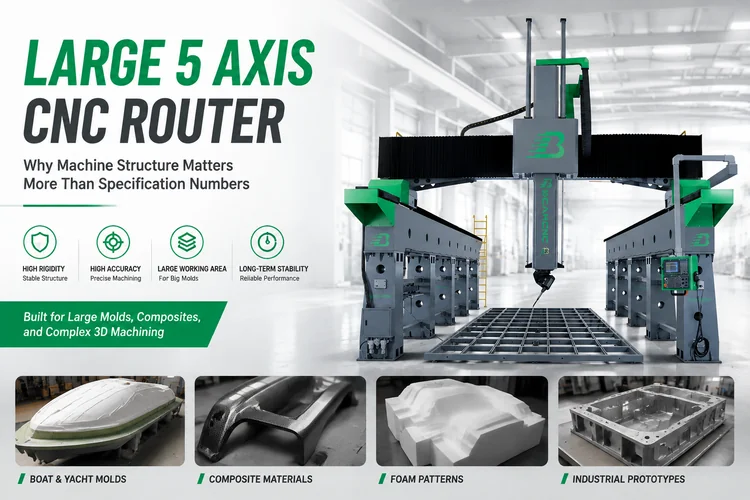
Why Machine Structure Matters in Large 5 Axis CNC Machining
Large 5 axis CNC routers are commonly used for:
- Yacht and boat molds
- Composite material molds
- Automotive prototypes
- Foam patterns
- Industrial models
- Large wooden components
These applications usually involve large workpieces and continuous multi-angle machining.
During machining, the spindle and cutting tools constantly change direction while following complex 3D surfaces. If the machine structure is not stable enough, problems may appear:
- Surface vibration marks
- Reduced finishing quality
- Increased tool wear
- More manual polishing work
For large parts, machining time can last for many hours. Maintaining structural stability throughout the entire process is more important than achieving good results during a short test cut.
Gantry Rigidity: The Foundation of Stable 5 Axis Machining
The gantry is one of the most important structural components of a large 5 axis CNC router.
A rigid gantry helps maintain stable spindle movement when machining large curved surfaces and complex geometries.
When evaluating a machine structure, manufacturers should look beyond simple weight comparisons. Important factors include:
- Structural rigidity
- Vibration resistance
- Long-term geometric stability
- Manufacturing process quality
A heavier machine does not automatically mean better performance. The key is whether the structure is engineered to maintain stability under real production conditions.
At BCAMCNC, the structural design of large 5 axis CNC routers focuses on long-term machining stability. The machine bed uses cast iron processing and heat treatment processes to improve structural stability and reduce the influence of internal stress during long-term operation.
For large mold and composite applications, a stable foundation helps the machine maintain consistent performance during continuous 3D machining.
Why Machine Manufacturing Process Affects Long-Term Accuracy
Many buyers compare machines based only on final specifications, but the manufacturing process behind the machine is equally important.
A large CNC machine needs to maintain its geometry over years of operation.
Important considerations include:
Stress Relief and Structural Stability
Metal structures can experience internal stress after manufacturing. Proper treatment processes help improve long-term stability.
Precision Machining and Assembly
The accuracy of guide systems, transmission components, and assembly quality directly affects machine movement.
Overall Structural Matching
The machine frame, gantry, spindle system, and control system must work together as one complete system.
This is why industrial buyers should evaluate not only the specification sheet but also how the machine is built.
Large Working Size Requires More Than a Bigger Table
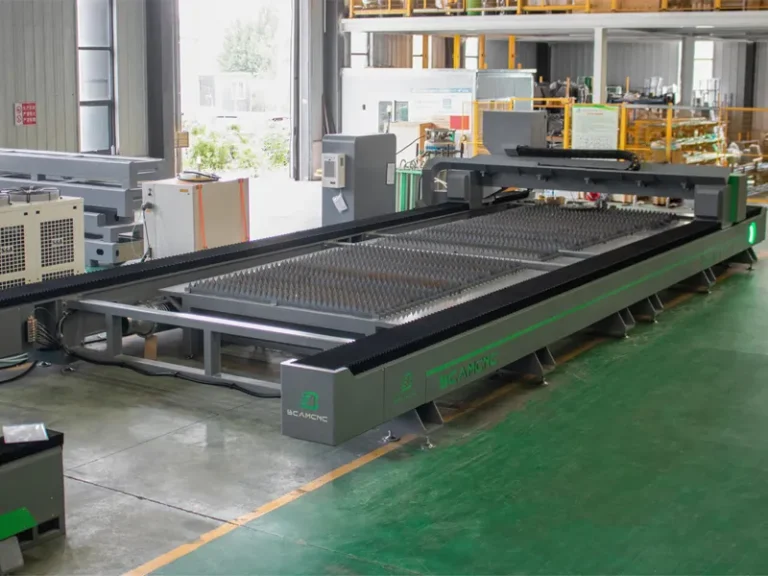
A larger working area is often necessary for industries such as boat mold manufacturing and composite production.
However, increasing machine size also creates new challenges.
A large machine requires:
- Stronger structural support
- Stable motion control
- Reliable transmission systems
- Proper alignment
A machine with a large working envelope but insufficient structural design may struggle to maintain machining quality across the entire working area.
For large-format machining, the goal is not simply to fit a bigger workpiece. The goal is to process large parts with consistent quality.
Specification Numbers Are Important, But They Are Not Everything
Spindle power, speed, and accuracy specifications are useful when comparing machines.
However, experienced manufacturers usually evaluate the complete machining system:
- Machine structure
- Spindle performance
- CNC control system
- Tool selection
- CAM programming
- Material characteristics
For example, when machining composite molds or large foam patterns, surface quality and stability may be more important than maximum cutting speed.
A balanced machine configuration usually delivers better long-term value than simply choosing the highest number on a specification sheet.
How to Evaluate a Large 5 Axis CNC Router Before Purchase
Before investing in a large 5 axis CNC router, manufacturers should consider:
What materials will be processed?
Wood, foam, fiberglass, carbon fiber, and other composites have different machining requirements.
What size components will be produced?
The machine should match both current production needs and future projects.
How stable is the machine during continuous operation?
Industrial production requires consistent performance, not only successful demonstration machining.
Does the supplier understand your application?
A suitable machine configuration depends on the actual production process.
Building Reliable Large-Scale Machining Solutions with BCAMCNC
A large 5 axis CNC router is a long-term investment. The machine must continue to provide stable performance after thousands of machining hours, not only during the first project.
BCAMCNC focuses on developing industrial CNC solutions for manufacturers working with large molds, composite materials, and complex curved components.
By considering machine structure, manufacturing processes, application requirements, and long-term production stability, BCAMCNC helps customers select suitable 5 axis CNC router solutions for their manufacturing needs.
Choosing a 5 axis CNC router is not only about selecting more specifications. It is about selecting a machine structure that can support your production goals for years.
Frequently Asked Questions
Why is machine structure important for a large 5 axis CNC router?
Because large-scale machining involves long processing times and complex tool movements. A stable structure helps maintain machining quality and reduce vibration-related problems.
Does a heavier CNC machine always perform better?
Not necessarily. Weight is only one factor. Structural design, material treatment, manufacturing quality, and system integration are also important.
What industries use large 5 axis CNC routers?
Typical applications include yacht molds, composite molds, automotive prototypes, foam models, and large industrial components.
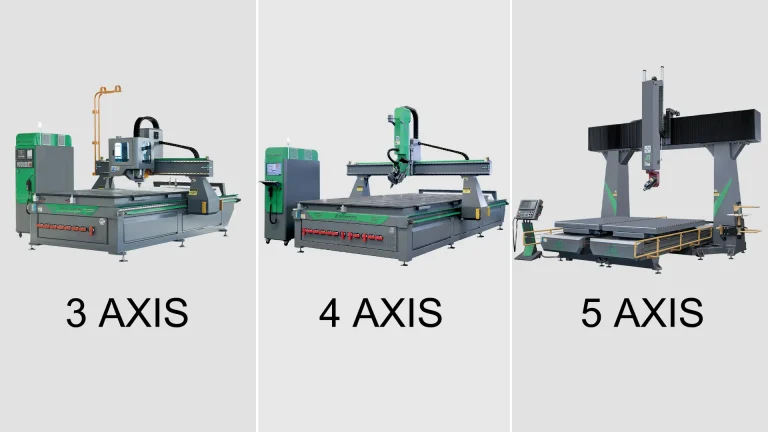
Why choose a 5 axis CNC router instead of a standard 3 axis machine?
A 5 axis CNC router can reduce repositioning requirements and improve efficiency when machining complex curved surfaces and multi-angle parts.