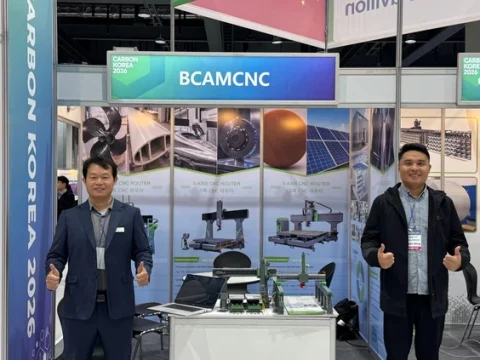

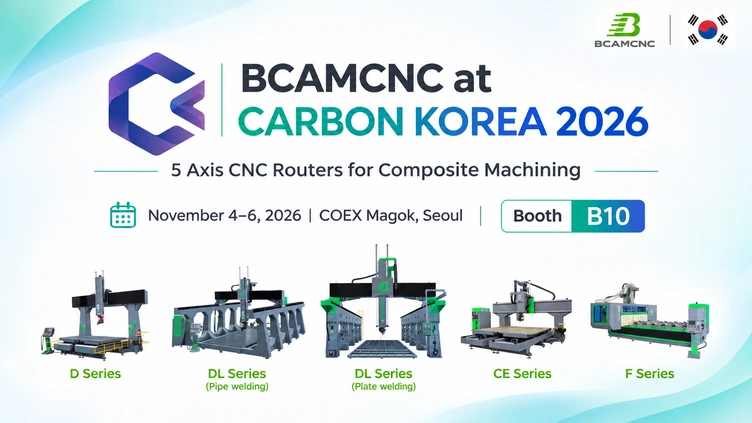
BCAMCNC is participating in CARBON KOREA 2026, taking place from November 4–6 at COEX Magok in Seoul, Republic of Korea. At Booth B10, the company presents its five axis CNC router solutions for manufacturers working with composite components, complex surfaces, and large tooling.
With equipment models and application displays, the BCAMCNC booth introduces different machine structures and their potential roles in composite manufacturing. The presentation brings together the D, DL, CE, and F series, helping manufacturers explore suitable configurations for their workpiece dimensions and machining requirements.
Five Axis Machining for Complex Composite Components
Composite parts often require machining beyond a flat surface. Curved edges, angled holes, and features on different faces can make tool access and workpiece positioning more demanding.
A five axis CNC router provides additional freedom to orient the cutting tool around the component. With suitable programming, tooling, and fixtures, this can reduce repositioning and make complex trimming and drilling operations easier to organize.
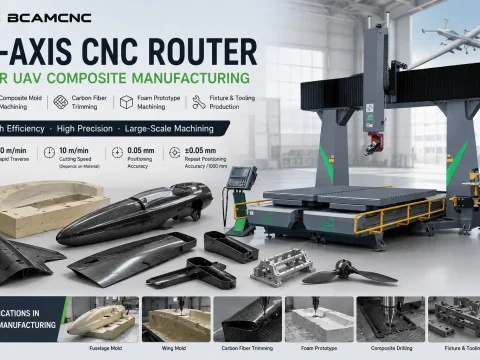
For carbon fiber and other reinforced composites, machine selection must also consider material behavior. Fiber orientation, laminate structure, cutting tools, workholding, and dust extraction all influence the machining process. BCAMCNC’s exhibition presentation focuses on matching the equipment configuration to these practical production needs.
From Composite Trimming to Mold and Pattern Machining
The exhibition highlights two connected areas of manufacturing: machining finished composite components and producing the molds or patterns used to form them.
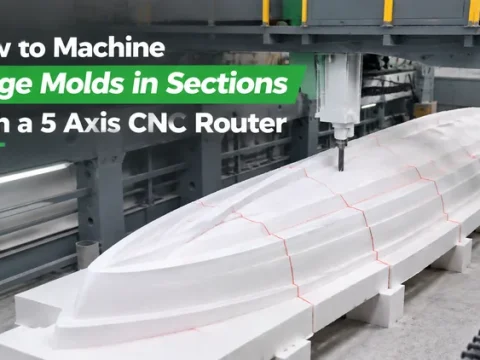
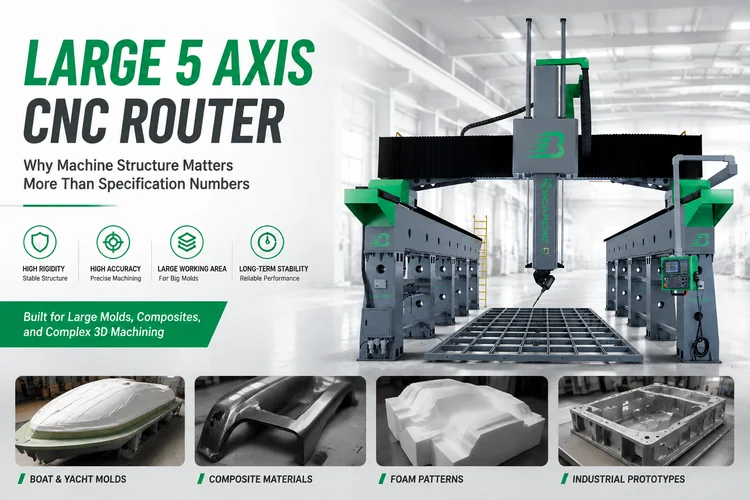
For molded components, potential operations include perimeter trimming, drilling, and machining openings or mounting features. For tooling production, five axis machining can provide access to curved surfaces and inclined areas on foam patterns and suitable tooling materials.
These requirements are relevant to applications such as automotive components, marine structures, aerospace parts, and renewable energy equipment. Each project calls for a different balance of working envelope, tool access, surface quality, and production efficiency.
Machine Structures Matched to the Workpiece
BCAMCNC presents several five axis router configurations at CARBON KOREA 2026, reflecting the different demands of component and tooling production.
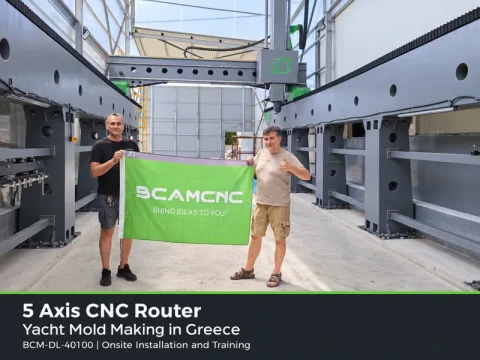
Large molds and long workpieces require sufficient travel and clearance throughout the machining path. Smaller curved components may place greater emphasis on fixture access and efficient loading. Machine selection therefore begins with the geometry of the actual part and the operations required.
Beyond table dimensions, manufacturers should assess usable machining space, rotary axis movement, spindle clearance, and fixture height. Reviewing these factors together helps identify a configuration that suits the complete process.
Planning the Complete Machining Process
A productive five axis installation depends on more than the machine itself. CAD/CAM programming, compatible postprocessors, cutting tools, fixtures, and operator training all contribute to a workable production setup.
For composite applications, dust collection and equipment protection also need to be considered during project planning. Addressing these requirements early helps manufacturers prepare for installation and establish appropriate operating procedures.
BCAMCNC’s participation in CARBON KOREA provides an opportunity to introduce its equipment range in the context of these broader manufacturing requirements.
Discuss Your Composite Machining Project with BCAMCNC
Through CARBON KOREA 2026, BCAMCNC presents its approach to five axis CNC routing for composite components, molds, and patterns.
Manufacturers evaluating a new project can share their material specifications, part drawings, workpiece dimensions, and required operations with the BCAMCNC team. These details provide a practical starting point for discussing machine configuration, tooling, and workholding.
Contact BCAMCNC through www.bcamcnc.com to discuss a five axis CNC router solution for your application.