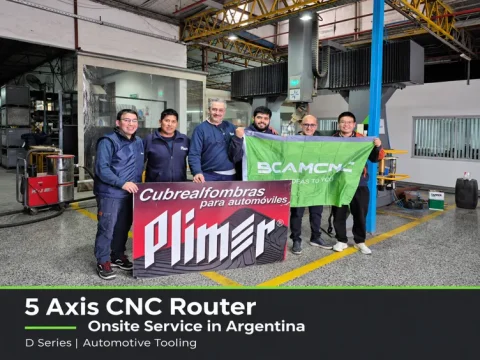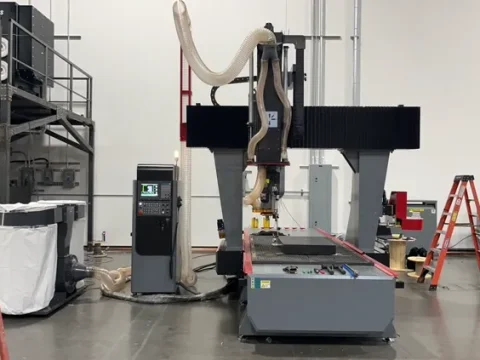

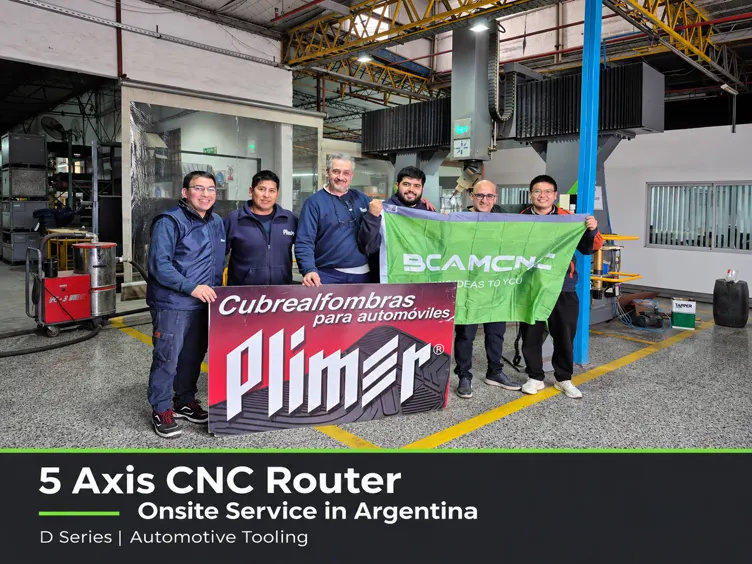
BCAMCNC provided onsite technical support at Plimer’s workshop, where a five-axis CNC router was used for three-dimensional pattern and mold machining. The application connects CNC machining with the tooling preparation required for shaped automotive products.
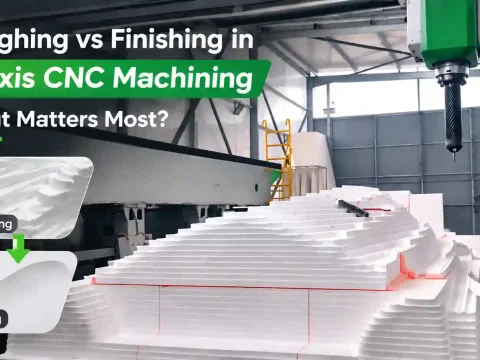
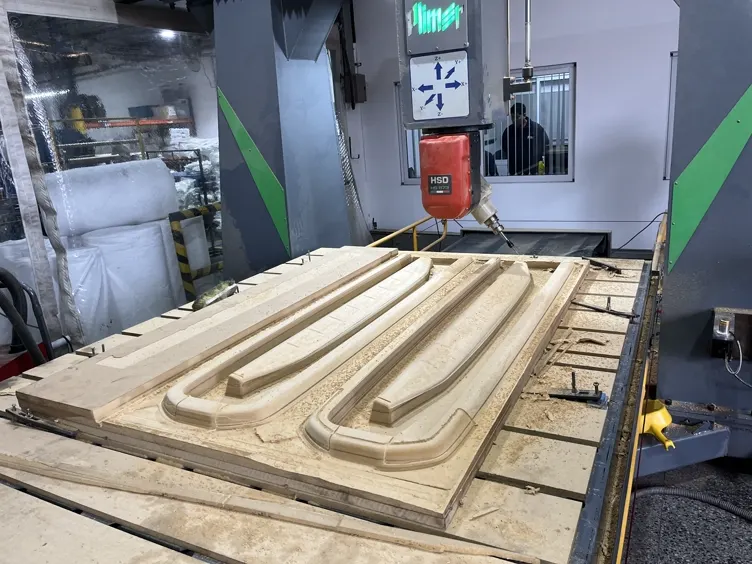
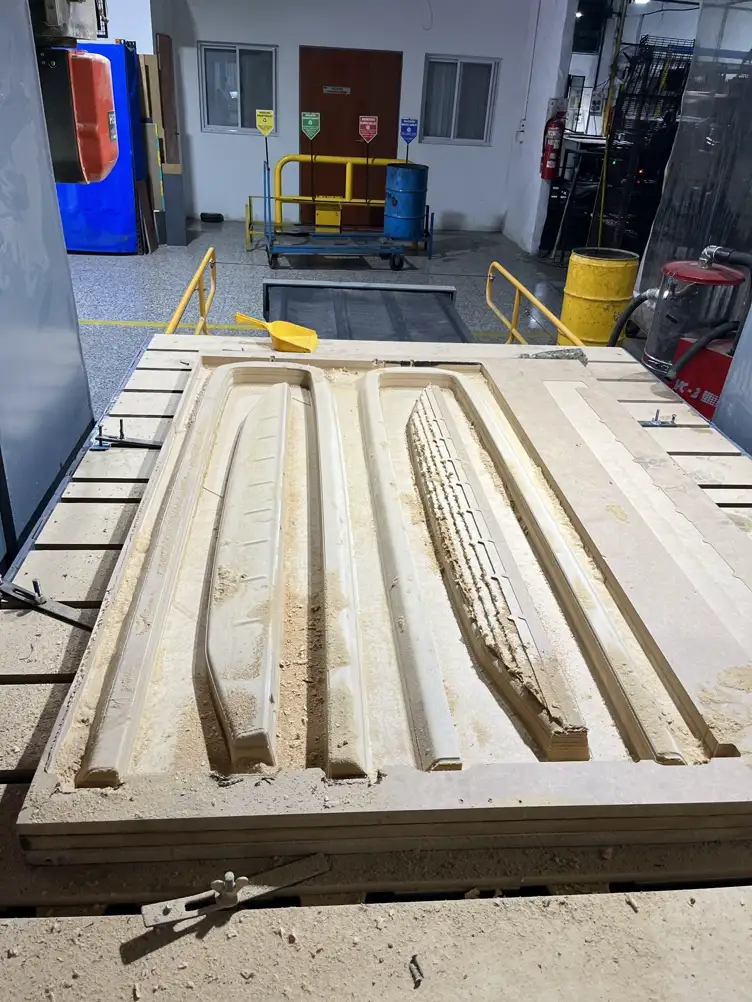
The onsite work centered on the machine and its practical application: machining layered board stock into elongated profiles with curved surfaces, recessed areas, and raised features. These workpieces illustrate the importance of coordinating material preparation, tool access, and machining sequence.
Understanding the Automotive Tooling Application
Translating product geometry into a machinable form
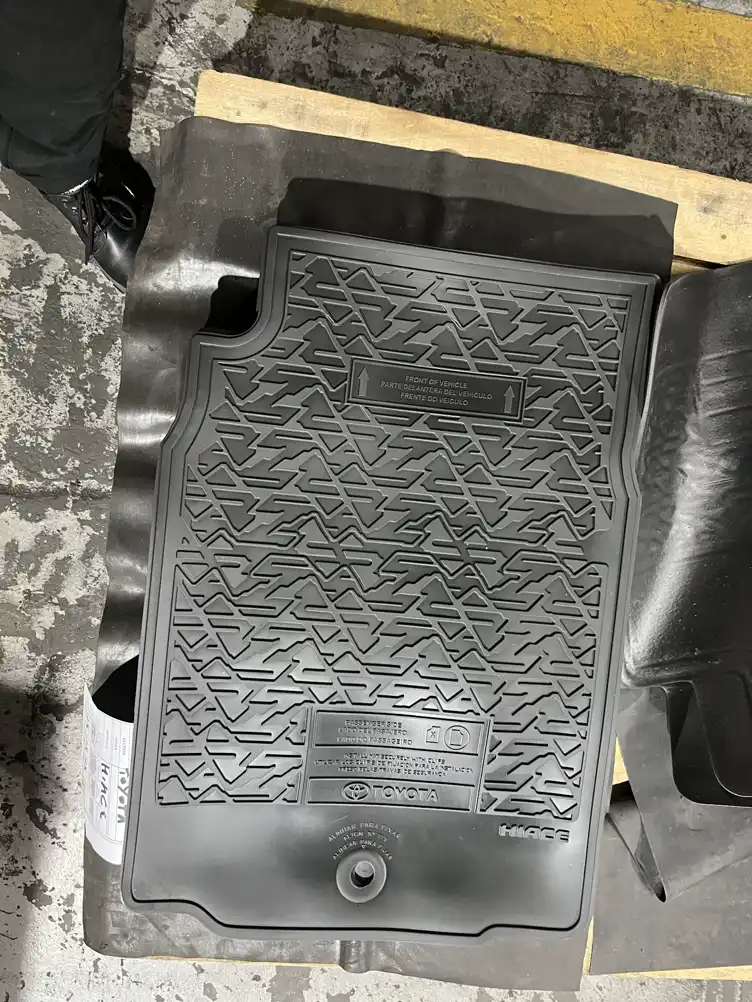
Automotive floor mats and related molded products combine functional shapes with surface details. Their manufacturing process may require patterns, forming tools, or molds that reproduce these features.
At Plimer, the machining work included elongated contoured forms arranged within a larger board assembly. The geometry combined broad surfaces with narrower channels and changes in height, requiring different cutting approaches across the workpiece.
A CNC router supports this preparation by machining the programmed geometry into the stock. The resulting tool or pattern must then be assessed against the requirements of the intended manufacturing process.
Preparing Layered Stock for Machining
Treating the blank as part of the process
The workpieces were machined from layered board stock. Building up a blank in layers provides material depth for raised forms and recessed features.
The preparation of this blank matters as much as the toolpath. Layer bonding, support, and workholding all influence how the material behaves as stock is removed.
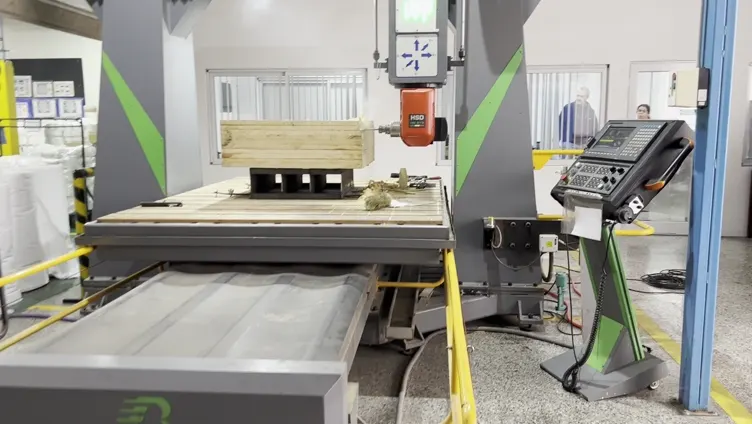
Clamps were positioned around the machining assembly to hold it on the table. When planning a job of this type, the fixture layout must leave room for both the cutting tool and the rotating spindle head throughout the programmed movement.
Using Five Axis Access Around Curved Features
Considering the complete spindle head
The machine’s articulating head allows the tool to approach a workpiece at an inclined angle. This can improve access to selected surfaces where a vertical approach would be restricted by the surrounding geometry.
For elongated patterns, the challenge is not simply reaching the top surface. Side features, transitions, and recessed areas also require attention to tool length, holder clearance, and the position of the head assembly.
Five-axis capability provides more options for approaching these areas. The appropriate strategy still depends on the part geometry, cutting tool, fixture arrangement, and verified machine program.
Managing Roughing and Finishing
Matching material removal to the stage of machining
The tooling work included areas with visible stock-removal steps alongside more refined curved surfaces. This reflects an important distinction between establishing the overall form and producing the final surface.
Roughing removes excess material while leaving stock for subsequent operations. Finishing follows the intended geometry more closely, with tool selection and stepover influencing the remaining surface texture.
For layered board tooling, the machining plan should also account for material edges and changes in section. A consistent finishing allowance helps avoid asking the finishing tool to remove uneven amounts of material across the part.
Connecting Onsite Support with the Customer’s Work
Discussing the application at the machine
Onsite technical support gives the customer and service technician an opportunity to review the equipment in its actual production environment.
At Plimer, the five-axis router, workpiece setup, and surrounding manufacturing area provided a practical setting for application-focused discussion. Machine movement, access around the stock, and the relationship between the tooling geometry and the machining process could be considered together.
This is a useful part of after sales service: connecting the equipment’s functions with the work the customer needs to carry out.
Evaluating the Machined Tooling
Checking suitability for the next manufacturing stage
Completing a machining program is one stage of tooling preparation. The workpiece must also be checked for dimensions, surface condition, and suitability for its intended use.
Depending on the stock material and manufacturing process, further sanding, sealing, coating, or other preparation may be required. These steps should be planned alongside machining rather than treated as unexpected additional work.
The Plimer application demonstrates how a five-axis CNC router can form part of a broader tooling workflow, from a built-up blank to a contoured machined workpiece.
Discuss Your Automotive Tooling Project
Start with the part and process requirements
For a pattern or mold machining project, provide BCAMCNC with your drawings or 3D model, stock material, maximum workpiece dimensions, and intended manufacturing process.
These details help establish the required working envelope, tool access, machine configuration, and technical support needs.
Website: https://www.bcamcnc.com
Email: admin@bcamcnc.com
WhatsApp: +86 151 5410 9683