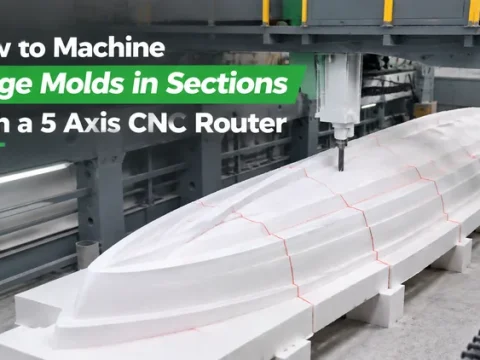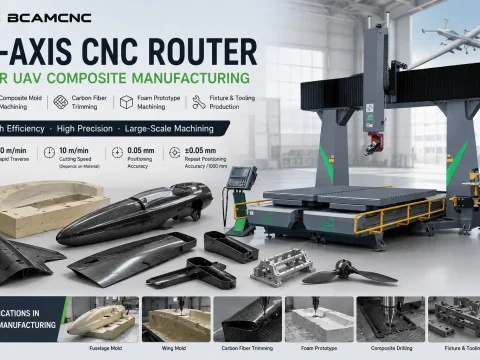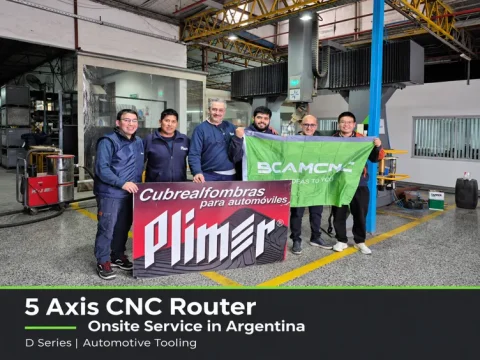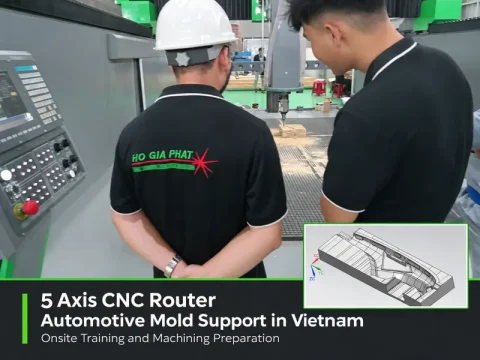

Recently, BCAMCNC welcomed a valued client from Angola to our factory for an on-site visit. The client came to explore our advanced CNC machinery, especially the 5-axis CNC router, which is widely used for precision cutting, engraving, and complex 3D shaping in woodworking and industrial applications.
During the visit, our team provided a comprehensive factory tour, demonstrating the production process, assembly lines, and quality control measures. The client had the opportunity to see the 5-axis CNC router in action, witnessing its high precision, stability, and efficiency. Our engineers also explained the machine’s features, including multi-axis control, automatic tool changing, and compatibility with various materials.
Impressed by the performance and professionalism of BCAMCNC, the client decided to place the order immediately. The 5-axis CNC router was purchased on-site, highlighting the trust in our technology, service, and commitment to quality.
This successful on-site transaction reinforces BCAMCNC’s mission to provide high-performance, reliable CNC solutions to clients worldwide. We are proud to serve customers from Angola and other countries, offering not only advanced machinery but also professional support, training, and after-sales service to ensure maximum satisfaction.