How CNC Wood Turning Machines Improve Production of Furniture Components
In solid wood furniture manufacturing, producing consistent wooden components is often more challenging than it appears. Furniture legs, stair columns, bed posts, and decorative parts may have simple shapes, but factories need stable dimensions, smooth surfaces, and repeatable production to maintain quality.
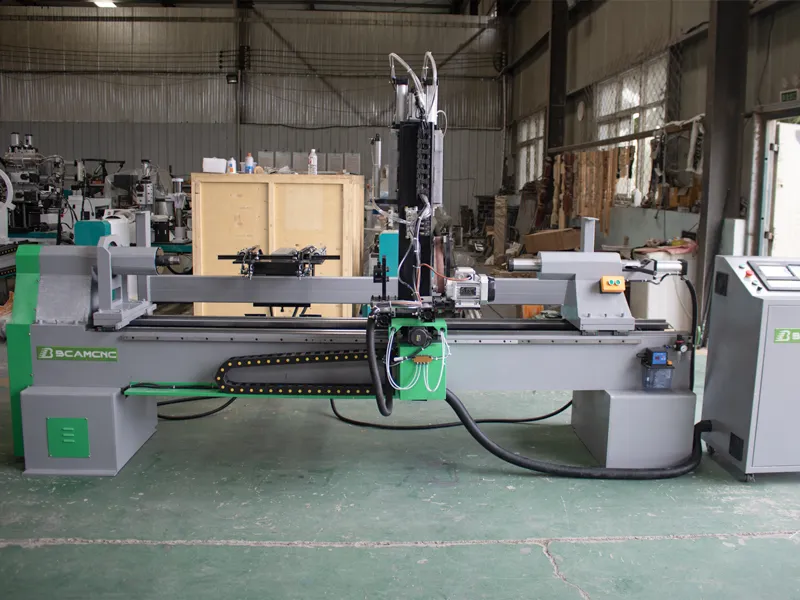
A wood lathe machine helps manufacturers produce these round and curved components efficiently. For factories making repeated furniture designs, a CNC wood lathe provides additional advantages by reducing dependence on manual skills and improving production consistency.
The value of a wood turning machine is not only in shaping wood. It is about creating a stable process that allows manufacturers to produce the same quality parts repeatedly.
Why Wood Lathe Machines Are Used in Solid Wood Furniture Production
Solid wood furniture often includes many components with rotational designs.
Common examples include:
- Furniture legs
- Stair balusters and columns
- Table supports
- Chair components
- Bed posts
- Decorative wooden parts
Traditional turning methods rely heavily on operator experience. Skilled workers can achieve excellent results, but maintaining the same quality across large quantities can become difficult.
For furniture factories, especially those producing repeated orders, consistency becomes a key production requirement.
A CNC wood lathe machine allows operators to save machining programs and reproduce the same design with more stable results.
Common Applications of Wood Lathe Machines
Furniture Legs Production
Furniture legs are one of the most common applications for wood turning machines.
Different furniture styles may require:
- Straight legs
- Tapered designs
- Decorative profiles
- Custom-shaped components
For factories producing dining tables, chairs, cabinets, or customized furniture, a wood lathe machine helps improve production efficiency while maintaining consistent dimensions.
Production challenges
Without stable machining processes, manufacturers may experience:
- Different sizes between batches
- Additional manual adjustment
- Longer production time
CNC turning helps reduce these variations by using programmed machining processes.
Stair Columns and Wooden Handrails
Stair manufacturing requires accurate and symmetrical wooden components.
Wood lathe machines are commonly used for:
- Stair posts
- Balusters
- Decorative columns
- Handrail components
These parts often require smooth surfaces and consistent shapes because small differences can affect final assembly.
A stable turning process helps manufacturers improve both appearance and installation efficiency.
Table, Chair and Decorative Components
Many high-end solid wood products include turned components.
Examples include:
- Table legs
- Chair supports
- Armrest parts
- Decorative wooden elements
Furniture manufacturers often need to produce multiple designs for different customer requirements.
A CNC wood turning machine allows factories to store different programs and switch between designs more efficiently.
CNC Wood Lathe vs Traditional Wood Turning
Both traditional wood turning and CNC wood lathe machines have their own applications.
Traditional turning can be suitable for one-off custom projects where craftsmanship is the main focus.
However, furniture factories usually need repeatable production and stable output.
| Traditional Wood Turning | CNC Wood Lathe | |
|---|---|---|
| Operation | Manual control | Program-controlled machining |
| Production consistency | Depends on operator skill | More repeatable |
| Batch production | Requires more manual work | More suitable for repeated parts |
| Design changes | Manual adjustment | Program modification |
| Operator dependency | Higher | Lower |
For commercial furniture production, CNC wood lathes can help manufacturers create a more predictable production process.
What Should Furniture Manufacturers Consider Before Choosing a Wood Lathe Machine?
Choosing a wood lathe machine depends on the actual production requirements.
Production Volume
A workshop producing occasional custom parts has different needs from a factory producing hundreds of identical components.
Higher production volume usually requires:
- More automation
- Stable machining cycles
- Easy program management
Workpiece Size
Manufacturers should consider the size of their typical components.
Important factors include:
- Maximum turning diameter
- Maximum processing length
- Product design requirements
Choosing the correct working range helps avoid production limitations later.
Automation Requirements
Different factories require different levels of automation.
Some manufacturers may need a simple CNC turning solution, while others may require a more integrated production process.
The right configuration depends on:
- Product type
- Production quantity
- Labor availability
- Future expansion plans
How Wood Lathe Machines Support Modern Furniture Manufacturing
Modern furniture factories need to balance customization with production efficiency.
Customers want unique designs, but manufacturers also need:
- Stable quality
- Controlled production costs
- Shorter processing time
A CNC wood lathe helps achieve this balance by making it easier to produce:
- Customized furniture components
- Repeated production orders
- Complex wooden profiles
When combined with other woodworking equipment, such as CNC routers, edge banding machines, and drilling machines, wood turning equipment can become an important part of a complete furniture production workflow.
Frequently Asked Questions
What products can be made with a wood lathe machine?
Wood lathe machines are commonly used for furniture legs, stair components, wooden columns, bed posts, and decorative wooden parts.
Is a CNC wood lathe suitable for furniture factories?
Yes. CNC wood lathes are especially suitable for manufacturers that require repeated production, consistent quality, and reduced dependence on manual operation.
What is the difference between a wood lathe and a CNC wood lathe?
A traditional wood lathe mainly depends on operator control, while a CNC wood lathe uses programmed machining processes to improve repeatability.
Improve Solid Wood Furniture Production with the Right Wood Turning Solution
A wood lathe machine is not only a shaping tool. For furniture manufacturers, it is part of a production system that affects efficiency, consistency, and product quality.
The right machine depends on your component size, production requirements, and processing goals.
BCAMCNC provides woodworking machinery solutions for manufacturers producing solid wood furniture components, helping customers select suitable equipment based on their production needs.
If you are looking for a reliable wood turning solution for furniture legs, stair parts, or other solid wood components, contact BCAMCNC to discuss your application.