Choosing a sheet metal bending machine by tonnage and bending length alone is one of the easiest ways to buy the wrong machine.
In real production, a press brake must match the material, thickness, bending length, part geometry, tooling, and daily workload. A machine with enough nominal tonnage can still produce inconsistent angles, slow cycle times, or excessive tool wear if the rest of the process is poorly matched.
For a fabrication shop, the right question is not simply, “How many tons do I need?” It is:
What machine configuration can produce my actual parts repeatedly, safely, and at a reasonable cost?
What Does a Sheet Metal Bending Machine Actually Need to Control?
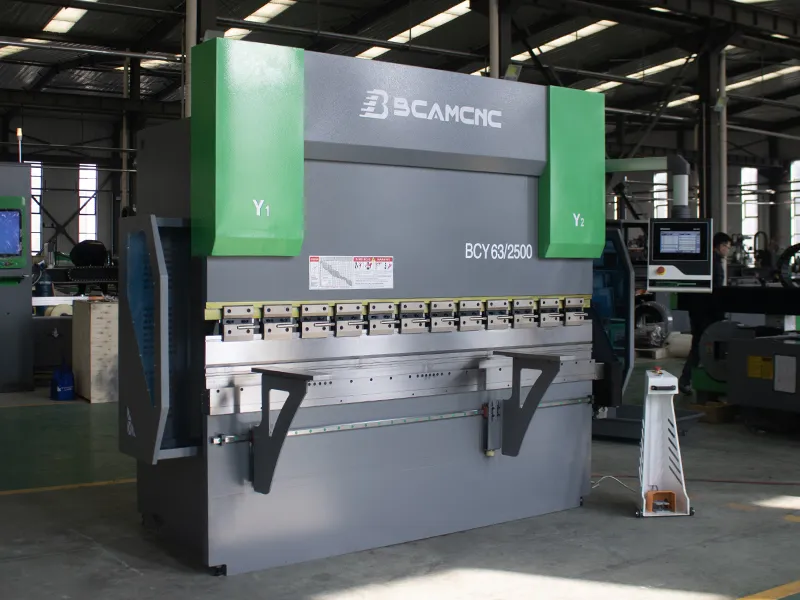
A press brake forms sheet metal by pressing the workpiece between an upper punch and lower die. The principle is simple. Maintaining repeatable results across hundreds of parts is not.
Several variables affect the final bend:
- Material type
- Sheet thickness
- Bending length
- Tensile strength
- V-die opening
- Punch radius
- Bending method
- Backgauge positioning
- Material springback
This is why two sheets with the same thickness do not necessarily require exactly the same bending conditions.
Mild steel, stainless steel, and aluminum behave differently under load. Even material from different batches can produce slightly different springback.
The operator may see this as an angle problem. In reality, the cause may be material variation rather than the CNC controller.
Press Brake Tonnage: Bigger Is Not Automatically Better
Tonnage is one of the first specifications buyers compare.
It is important—but purchasing excessive capacity does not automatically improve bending quality.
Required bending force depends on the material, thickness, bend length, tooling, and bending method. As sheet thickness increases, required force can rise quickly.
The V-die opening also matters. A narrower die opening generally requires greater bending force, while a wider opening reduces force but changes the bending geometry and minimum flange requirements.
This creates a practical purchasing problem:
The machine should be selected around the parts you actually manufacture, not around the largest tonnage number available within the budget.
Before selecting a press brake, prepare several representative drawings covering your thin, thick, short, long, simple, and difficult parts. They provide far more useful information than simply saying, “We normally bend 6 mm steel.”
Bending Length and Machine Structure
A 3200 mm press brake is not simply a smaller machine stretched to 4000 or 6000 mm.
As bending length increases, structural rigidity becomes increasingly important.
Under high bending force, deformation of the ram and machine frame can affect the angle along a long workpiece. The center and ends of the part may not bend exactly the same.
This is why long-part production requires attention to:
- Frame rigidity
- Ram stability
- Crowning compensation
- Tool alignment
- Machine installation and leveling
For manufacturers producing long electrical cabinets, structural panels, doors, enclosures, or heavy sheet-metal components, these details can matter more than a small difference in maximum approach speed.
CNC Control Does Not Automatically Guarantee Accurate Parts
Modern CNC press brakes can control multiple axes and simplify repetitive production, but CNC control cannot correct every production problem.
If the material thickness changes, tooling is worn, the machine is poorly leveled, or the wrong die is installed, the finished angle can still be wrong.
A good bending process combines:
CNC control + correct tooling + stable machine structure + suitable parameters + consistent material
This distinction matters when comparing inexpensive machines based purely on the number of CNC axes.
More axes can improve flexibility and automation, but only when those axes solve a real production requirement.
The Backgauge Has a Direct Effect on Productivity
Operators spend a surprising amount of time positioning parts.
For simple components, a basic backgauge may be sufficient. For parts with several bending positions or different flange dimensions, more capable CNC-controlled backgauge systems can reduce manual measurement and adjustment.
This becomes increasingly important in batch production.
A few seconds saved on one bend does not look significant. Multiply it by several bends per component and hundreds of components per shift, and positioning efficiency becomes a real production-cost issue.
Tooling Is Part of the Machine Investment
Press brake tooling is sometimes treated as an accessory considered after the machine has been selected.
That is a mistake.
Punch and die selection directly affects:
- Bend radius
- Required tonnage
- Minimum flange size
- Part geometry
- Surface condition
- Production flexibility
A factory producing simple 90-degree brackets has very different tooling requirements from one producing electrical cabinets, stainless-steel enclosures, architectural panels, or complex fabricated components.
Tooling requirements should therefore be discussed during machine selection, not after installation.
Air Bending, Bottom Bending and the Real Production Requirement
Different bending methods place different demands on the machine and tooling.
Air bending is widely used because it provides flexibility and allows different angles to be produced with the same tooling under suitable conditions.
Other forming methods may require greater force or dedicated tooling.
The important point for buyers is simple:
Do not select a press brake before defining how your parts will actually be formed.
The drawing, material, bend radius, flange dimensions, and required tolerance should determine the process.
Hidden Costs Buyers Often Miss
Purchase price is only one part of press brake ownership.
A lower initial machine price can quickly lose its advantage if production requires:
- Frequent manual angle correction
- Excessive setup time
- Repeated trial bending
- Additional tooling purchases
- High scrap rates
- Long downtime when service is required
Labor matters as well.
If one machine requires an experienced operator to constantly compensate for material and positioning problems while another provides a more controlled workflow, the difference becomes significant over several years of production.
This is why experienced buyers increasingly evaluate total production cost, not simply machine price.
What Information Should You Give a Press Brake Supplier?
Before requesting a quotation, prepare actual production information.
Ideally, provide:
- Materials being processed
- Minimum and maximum thickness
- Maximum bending length
- Typical part drawings
- Required bend angles and radii
- Production volume
- Special tooling requirements
- Automation requirements
If possible, send several representative drawings.
A supplier can recommend a much more appropriate machine from real parts than from a request such as:
“I need a 160-ton press brake.”
The tonnage should be the result of evaluating the application—not the starting assumption.
Choosing a Sheet Metal Bending Solution with BCAMCNC
BCAMCNC supplies metal fabrication equipment for different sheet-metal production requirements.
When selecting a press brake, the objective should not be to specify the largest machine possible. The machine, CNC system, backgauge, tooling, and bending capacity should work together around the customer’s actual products.
For a factory producing repeated sheet-metal components, this can mean greater consistency and easier operation. For a job shop handling frequently changing orders, flexibility and setup efficiency may be more important.
The correct configuration depends on what happens on your factory floor.
If you are evaluating a new sheet metal bending machine, send BCAMCNC your material type, thickness range, maximum bending length, and several typical part drawings. The technical team can evaluate the application before recommending a press brake configuration.
Frequently Asked Questions
How do I calculate the required press brake tonnage?
Required force depends on material strength, sheet thickness, bending length, die opening, and bending method. It should be calculated for the actual application rather than selected from thickness alone.
Can one press brake bend stainless steel, carbon steel, and aluminum?
A suitable press brake can process different metals within its capacity, but bending force, springback, tooling, and process parameters must be adjusted for each material.
Is a CNC press brake better for batch production?
For repeated components, CNC control and programmable positioning can reduce setup work and improve consistency. The required level of automation depends on part complexity and production volume.
What information is most important when buying a press brake?
Material, maximum thickness, bending length, part geometry, bend radius, production volume, and representative drawings are more useful than simply specifying a desired tonnage.