
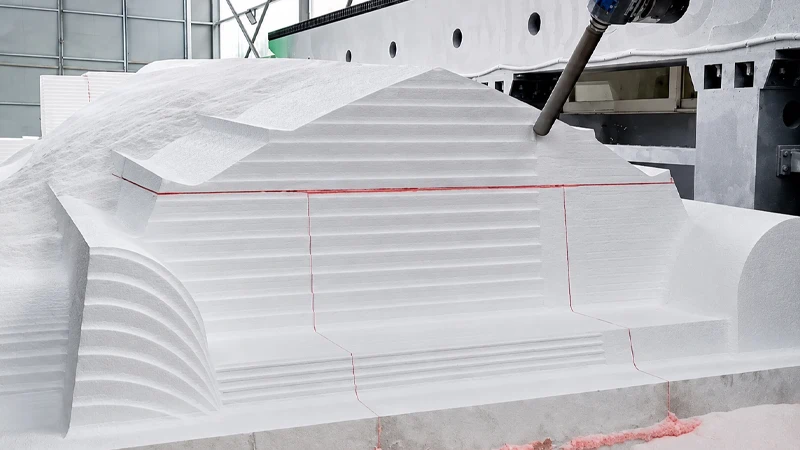
Large foam molds are widely used in boatbuilding, automotive prototyping, composite tooling, and industrial model manufacturing. These projects often involve oversized workpieces, complex curved surfaces, and substantial amounts of material removal.
For manufacturers using a 5 axis CNC router, machining time is an important factor affecting production schedules and operating costs.
However, reducing machining time is not simply a matter of increasing feed rates or spindle speeds. The entire machining process must be considered, from preparing the foam block and selecting cutting tools to planning toolpaths and finishing the surface.
A well-planned machining strategy can help manufacturers improve efficiency without sacrificing the quality required for subsequent mold-making operations.
1. Start with an Efficient CAD and CAM Workflow
Machining efficiency begins before the CNC router starts cutting.
A large foam mold may contain complex curves, deep sections, and areas that require different tool orientations. If the CAD model or CAM strategy is poorly prepared, the machine may spend unnecessary time performing inefficient movements.
Before generating toolpaths, manufacturers should review the model for unnecessary geometry, machining accessibility, and suitable workpiece orientation.
Important considerations include:
- Confirming the final model dimensions and machining allowance
- Selecting an appropriate workpiece orientation
- Identifying areas that require multi-axis machining
- Reducing unnecessary tool movements
- Checking toolpath transitions and potential collisions
For large boat hull patterns or automotive models, careful CAM planning can help avoid unnecessary repositioning and repeated machining operations.
2. Optimize Roughing for Efficient Material Removal
Roughing removes most of the excess foam before finishing begins.
Because large foam blocks may contain substantial amounts of material that must be removed, roughing strategy can strongly influence the overall machining cycle.
The objective is to remove material efficiently while leaving a consistent allowance for finishing.
Use suitable roughing tools
Tool diameter, cutting length, and geometry should match the foam material and workpiece shape.
Larger tools may be useful for accessible surfaces and high-volume material removal, while smaller tools may be necessary around narrow features.
Choose appropriate cutting parameters
Feed rate, spindle speed, depth of cut, and tool engagement should be selected according to the cutting tool, foam density, machine configuration, and machining conditions.
Increasing feed rate without considering these factors may cause poor cutting performance or excessive vibration.
Avoid unnecessary roughing passes
CAM strategies should minimize redundant cutting movements and unnecessary travel through areas where material has already been removed.
Efficient roughing prepares the workpiece for finishing without removing more material than necessary.
3. Leave a Consistent Finishing Allowance
One common source of unnecessary machining time is an inconsistent amount of material remaining after roughing.
If too much foam remains, finishing tools may need additional passes to reach the final geometry.
If the remaining allowance is uneven, cutting engagement may vary across the surface, making finishing less predictable.
A suitable finishing allowance helps maintain more consistent cutting conditions.
The appropriate value depends on the material, tool diameter, roughing strategy, and required surface quality.
For large foam molds, the goal is to leave enough material for the finishing process to remove roughing marks without creating unnecessary additional work.
4. Select the Right Finishing Strategy
Finishing often requires closely spaced toolpaths to create smooth curved surfaces.
However, using extremely small toolpath spacing across an entire large mold can significantly increase machining time.
Instead, manufacturers should match finishing parameters to the actual surface requirements.
Adjust step-over according to surface geometry
Broad, gently curved areas may not require the same toolpath spacing as detailed or sharply curved sections.
Choose suitable cutting tools
Tool shape and diameter affect the surface produced by each pass. Appropriate tool selection can help achieve the required finish without unnecessary machining.
Use five-axis tool orientation where beneficial
A 5 axis CNC router can adjust the cutting tool’s orientation when machining complex surfaces.
This can improve accessibility and allow different machining strategies, depending on the geometry and machine configuration.
The objective is to achieve the required surface quality with an efficient number of passes rather than automatically selecting the finest possible toolpath.
5. Reduce Unnecessary Tool Changes and Non-Cutting Movements
Machining time includes more than the time spent cutting foam.
Tool changes, repositioning, rapid movements, program interruptions, and setup adjustments all contribute to the total production cycle.
For large molds, these activities can become significant when a project involves multiple tools or machining sections.
Manufacturers can improve workflow efficiency by:
- Grouping operations that use the same cutting tool
- Planning a logical machining sequence
- Reducing unnecessary retract and approach movements
- Checking tool accessibility before machining
- Preparing tools and fixtures before production begins
CAM simulation can help identify inefficient movements and potential interference before the program is transferred to the machine.
Reducing non-cutting time can improve overall productivity without requiring more aggressive cutting parameters.
6. Improve Workpiece Positioning and Stability
Large foam blocks must be positioned securely throughout the machining process.
Although many foam materials are relatively lightweight, oversized blocks can still present challenges during handling, alignment, and machining.
Unstable workholding may cause movement, inconsistent cutting conditions, or the need to stop and readjust the workpiece.
Before machining, manufacturers should confirm that the foam block is properly supported and that the fixture does not interfere with the cutting tool or spindle head.
For projects involving multiple foam sections, establishing consistent reference positions can also simplify subsequent machining and assembly.
A stable setup supports more predictable machining and reduces the risk of avoidable interruptions.
7. Consider Whether Large Molds Should Be Machined in Sections
Not every large mold needs to be machined as a single piece.
For oversized boat hull patterns, wind turbine blade tooling, and other large industrial molds, dividing the model into sections may simplify material handling and machining.
However, sectional machining also introduces additional work, including alignment, assembly, bonding, and surface preparation.
The decision should consider:
- Overall workpiece dimensions
- Available CNC working area
- Foam block dimensions
- Transportation and handling requirements
- Assembly accuracy
- Subsequent finishing requirements
Machining a large mold in sections is not automatically faster. The total project time must include both CNC machining and post-machining assembly.
Where the machine’s working capacity allows, processing larger sections may reduce the number of joints and setups required.
8. Match the CNC Router to the Size of the Project
Machine configuration can influence machining efficiency, particularly when processing large molds.
A machine with insufficient working space may require additional workpiece repositioning or sectional machining.
Similarly, limited tool accessibility can make certain surfaces more difficult to process.
When selecting a large-format 5 axis CNC router, manufacturers should evaluate:
Working area: Whether the machine can accommodate the intended mold dimensions.
Z-axis travel and clearance: Whether the cutting tool and spindle head can access the required machining areas.
Machine structure: Whether the machine provides suitable stability for the intended operations.
Spindle and tooling: Whether the configuration supports the required foam machining processes.
Control system and CAM compatibility: Whether the planned toolpaths can be programmed, simulated, and executed appropriately.
For large boat hull patterns and industrial foam molds, selecting a machine around the actual workpiece can help reduce unnecessary setup complications.
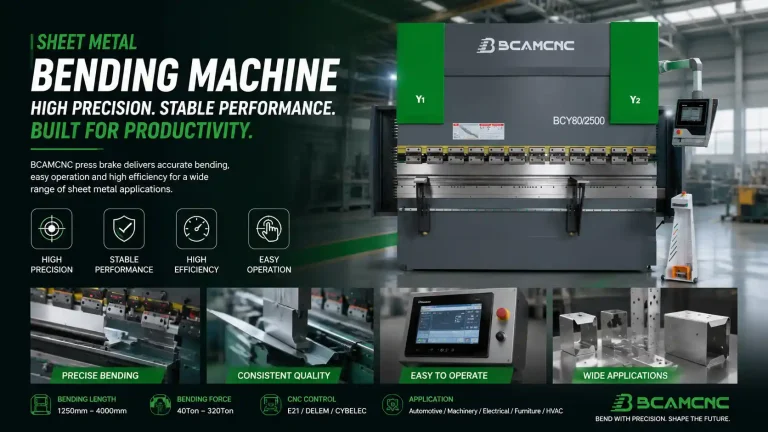
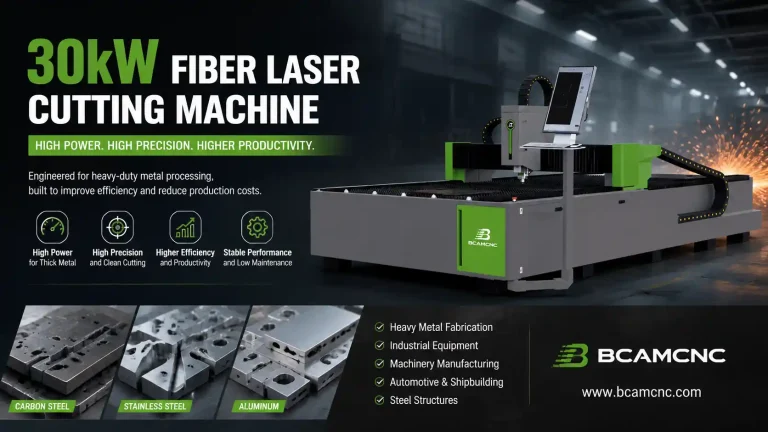
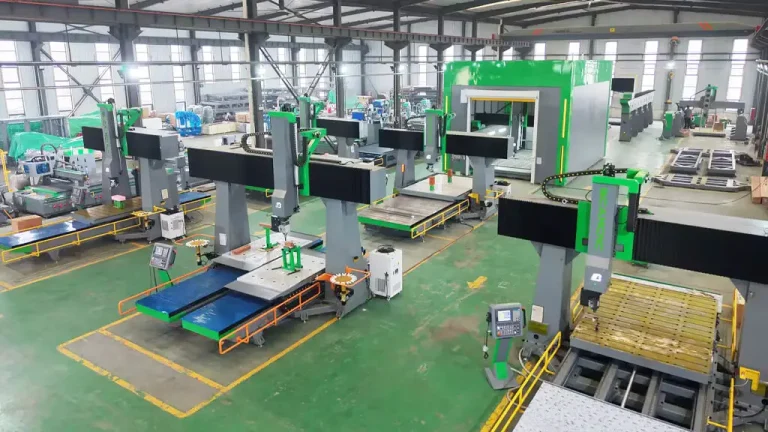
BCAMCNC 5 Axis CNC Routers for Large Foam Mold Machining
BCAMCNC manufactures five-axis CNC router machines for applications including foam mold machining, tooling board processing, composite tooling, and large industrial models.
The BCAMCNC DL Series is designed for large-format machining applications where extended working capacity and machining depth are important considerations.
For manufacturers producing boat hull patterns, automotive models, and other oversized foam components, suitable machine dimensions and tool accessibility are essential.
BCAMCNC can help customers evaluate workpiece dimensions, material requirements, and machining applications when selecting an appropriate five-axis CNC router configuration.
However, machine specifications are only one part of production efficiency. Cutting tools, CAM programming, workholding, and finishing requirements must also be considered.
Frequently Asked Questions
What is the most effective way to reduce CNC foam machining time?
There is no single solution for every project. Improving roughing efficiency, selecting suitable tools, optimizing CAM toolpaths, and reducing unnecessary machine movements can all help shorten machining cycles.
Does increasing feed rate always reduce machining time?
No. Feed rate must be appropriate for the cutting tool, material, machine, and machining conditions. Excessively aggressive settings may reduce cutting quality or cause interruptions.
Can a 5 axis CNC router machine large foam molds faster than a 3 axis CNC router?
It depends on the geometry. Five-axis machining offers greater tool-orientation flexibility and may reduce repositioning for certain complex surfaces. However, it is not automatically faster for every application.
Does a smoother surface always require more machining time?
A finer surface finish often requires more closely spaced toolpaths, but tool geometry, orientation, material, and machining strategy also affect the result. The best approach is to match surface quality to the actual project requirements.
Should large foam molds be machined in one piece or multiple sections?
The decision depends on the mold dimensions, machine capacity, handling requirements, and assembly process. Both approaches can be appropriate depending on the project.
Final Thoughts
Reducing machining time for large foam molds requires more than increasing machine speed.
Efficient CAD/CAM preparation, suitable roughing and finishing strategies, appropriate cutting tools, stable workholding, and a well-planned machining sequence all contribute to the overall production cycle.
For large boat hull patterns, automotive models, and composite tooling projects, manufacturers should evaluate machining efficiency alongside surface quality and subsequent production requirements.