When manufacturing large molds, choosing the right machining equipment can have a significant impact on production efficiency and finished-part quality.
Two common solutions are 5 axis CNC routers and industrial robotic milling systems.
Both can process complex 3D surfaces, including foam patterns, automotive prototypes and composite molds. However, they differ in machine structure, rigidity, working range and machining performance.
So, which solution is better for your factory?
The answer depends on the material, mold dimensions, accuracy requirements and production process.
1. Machine Structure: Gantry vs Robotic Arm
The most noticeable difference is how the machines move.
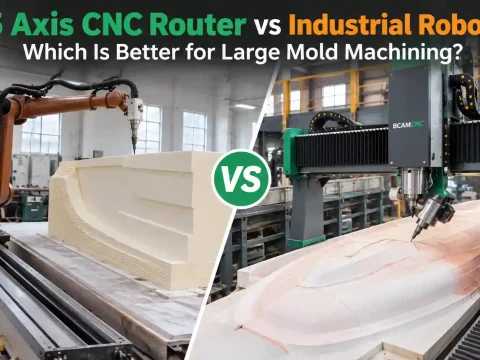
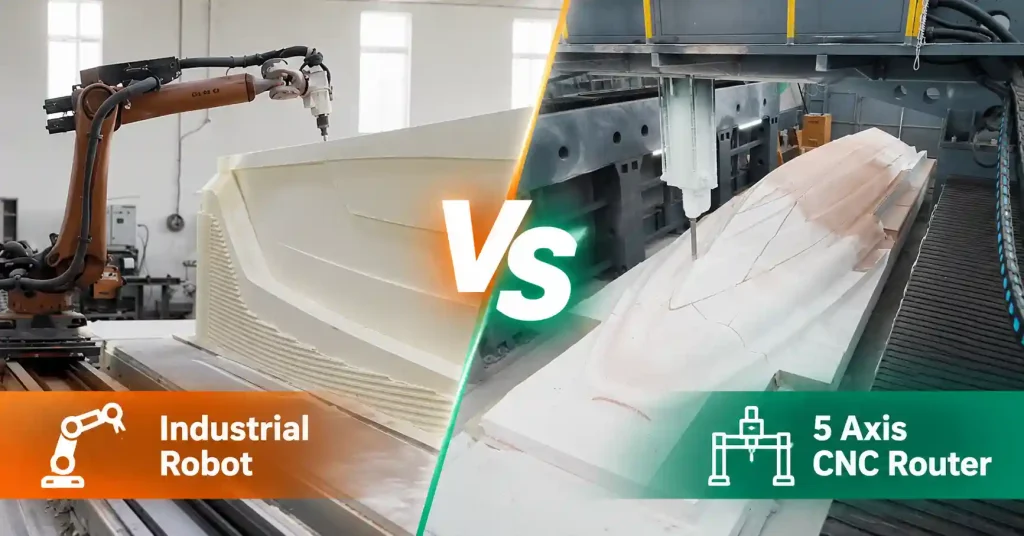
A gantry-type 5 axis CNC router uses linear axes combined with a rotating and tilting machining head. This structure is commonly used for large molds requiring controlled tool movement across an extended working area.
An industrial robot uses a multi-jointed arm to position the cutting tool. Its flexible movement allows it to approach complex surfaces from different directions.
Key difference: Gantry CNC routers generally offer greater structural rigidity, while robotic systems provide more flexible tool positioning.
For large molds requiring stable cutting performance, machine rigidity is an important consideration.
2. Machining Accuracy and Surface Quality
Accuracy is one of the most important factors when selecting equipment for mold manufacturing.
A 5 axis CNC router is generally better suited to applications requiring consistent tool positioning and dimensional control across large surfaces.
Industrial robots can also achieve useful machining results, particularly when processing softer materials. However, their positioning behavior and structural deflection can vary with arm extension, orientation and cutting forces.
Actual performance depends on the machine configuration, calibration, tooling and cutting conditions.
Which is better?
For applications requiring tighter dimensional control and consistent surface quality, a properly configured 5 axis CNC router is often the more suitable option.
For applications with less demanding tolerances, robotic milling may be sufficient.
3. Working Area and Accessibility
Large molds are not always easy to machine.
Boat hull patterns, automotive models and irregular 3D components may require access to deep cavities, side walls and complex curved surfaces.
A large-format 5 axis CNC router provides a defined working envelope, making it suitable for machining large components within its available travel and head clearance.
Industrial robots offer flexible tool orientation and can sometimes access areas that are difficult for conventional gantry configurations.
However, a robot’s usable machining range depends on its reach, installation arrangement and tool orientation.
What buyers should consider: A larger nominal working area does not automatically mean better accessibility. The actual mold geometry should determine the machine choice.
4. Material and Cutting Performance
Different materials place different demands on machining equipment.
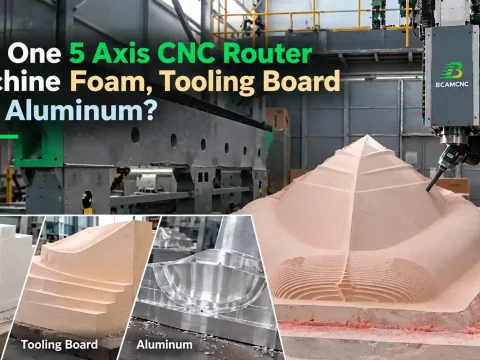
5 Axis CNC Router Applications
- EPS foam molds and patterns
- Polyurethane tooling board
- Composite molds and patterns
- Large automotive prototypes
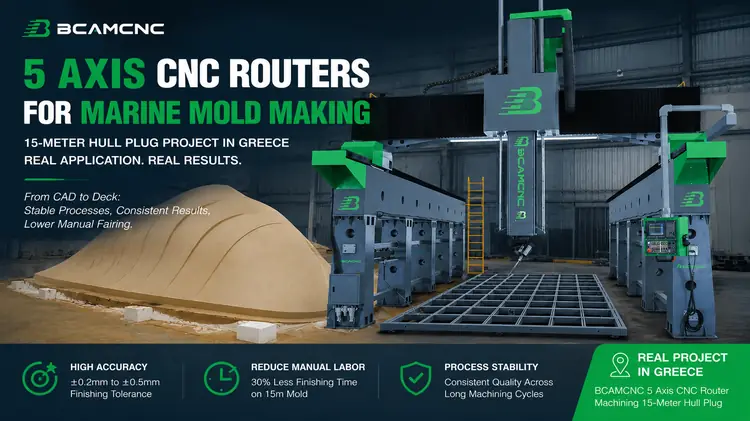
- Boat and yacht mold manufacturing
Industrial Robotic Milling Applications
- Large foam sculptures
- Lightweight prototype models
- Complex artistic shapes
- Foam trimming and shaping
- Selected composite trimming applications
Both technologies can process some of the same materials.
However, when machining denser materials or using cutting parameters that generate higher forces, machine rigidity becomes increasingly important.
5. Production Efficiency and Operating Costs
Neither solution is automatically faster or cheaper.
A 5 axis CNC router may provide advantages when machining large molds that require stable cutting conditions, repeatable toolpaths and consistent surface quality.
Robotic systems may offer advantages where flexible positioning, changing workpiece locations or integration with other automated operations is important.
Total investment should include more than the equipment price.
Buyers should also consider:
- Machine installation and factory space
- Programming and software
- Tooling and maintenance
- Operator training
- Machining time and finishing requirements
The most economical solution is the one that meets production requirements at a suitable total operating cost.
6. 5 Axis CNC Router vs Industrial Robot: Quick Comparison
| Factor | 5 Axis CNC Router | Industrial Robot |
|---|---|---|
| Structure | Gantry-based | Articulated robotic arm |
| Rigidity | Generally higher | More dependent on arm position |
| Accuracy | Well suited to controlled mold machining | Application and configuration dependent |
| Flexibility | Defined machining envelope | Flexible tool orientation |
| Large Foam Molds | Suitable | Suitable |
| Dense Tooling Board | Often advantageous | Requires careful evaluation |
| Installation | Dedicated machining area | Flexible cell configurations |
| Best Fit | Precision-oriented mold production | Flexible machining and automation |
Which Machine Should You Choose?
Choose a 5 Axis CNC Router When:
Your factory produces large molds, tooling board components or complex 3D parts requiring stable cutting performance and consistent dimensional results.
Consider Industrial Robotic Milling When:
Your applications involve lightweight materials, irregular shapes, flexible tool positioning or integration with robotic production processes.
For either option, a representative machining test can help determine whether the equipment meets your actual requirements.
BCAMCNC Solutions for Large Mold Machining
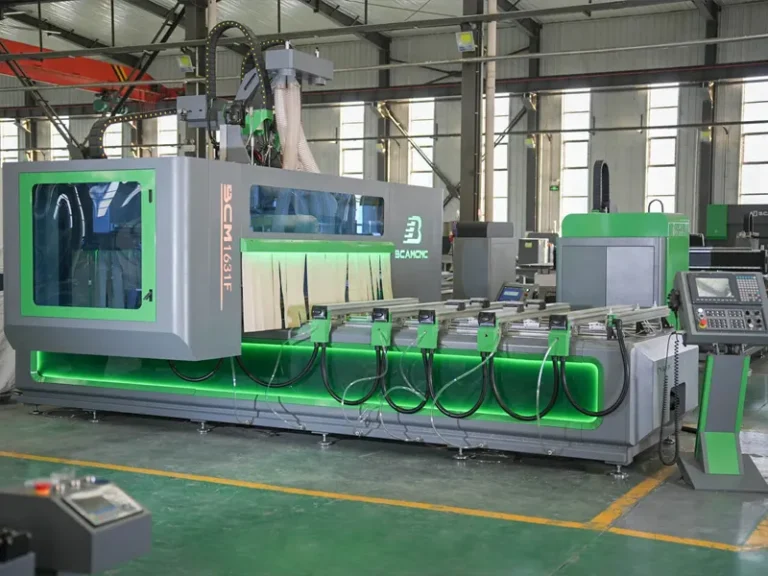
BCAMCNC offers 5 axis CNC router solutions for applications including large foam molds, tooling board, composite patterns and complex 3D components.
For manufacturers working with boat molds, automotive prototypes and other large parts, machine selection should consider workpiece dimensions, material, surface geometry and required machining accuracy.
If you are evaluating equipment for large mold manufacturing, share your 3D model, material, dimensions and production requirements with BCAMCNC.
Our team can help evaluate a suitable 5 axis CNC router configuration for your project.
Frequently Asked Questions
Can an industrial robot replace a 5 axis CNC router?
In some applications, yes. Robotic milling can be suitable for foam shaping and certain complex geometries, but applications requiring higher rigidity or tighter tolerances may benefit from a 5 axis CNC router.
Which is better for large foam mold machining?
Both can be suitable. The best choice depends on mold size, required accuracy, accessibility, machining time and available equipment configuration.
Are industrial robots cheaper than 5 axis CNC routers?
Not necessarily. Total cost depends on the robot or CNC configuration, spindle, tooling, software, installation and integration requirements.
Which machine is better for composite mold manufacturing?
A 5 axis CNC router is often suitable for machining tooling boards and composite mold patterns. Robotic systems may also be useful for trimming and selected machining operations, depending on the required accuracy and cutting forces.