When searching for a 5 axis CNC router for sale, one of the first questions buyers ask is: How much does a 5 axis CNC router cost?
The answer is not always straightforward.
Two machines may have similar working dimensions and spindle power, yet their quotations can be significantly different.
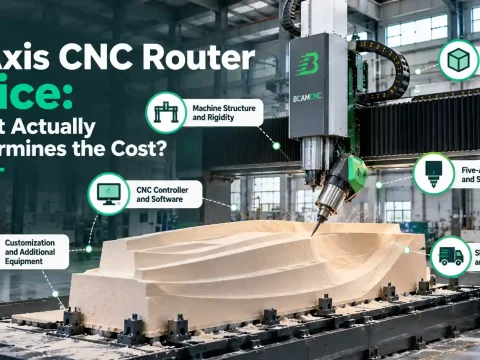
This is because 5 axis CNC router price depends on much more than machine size. Mechanical structure, five-axis head configuration, control systems, customization and service support can all influence the final cost.
Understanding these differences helps buyers compare quotations more effectively and avoid paying for features they do not actually need.
1. Machine Size and Working Area
Machine dimensions are among the most obvious factors affecting price.
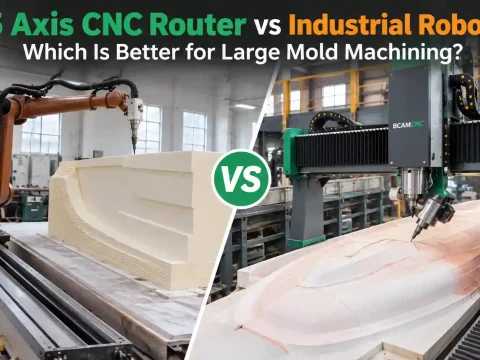
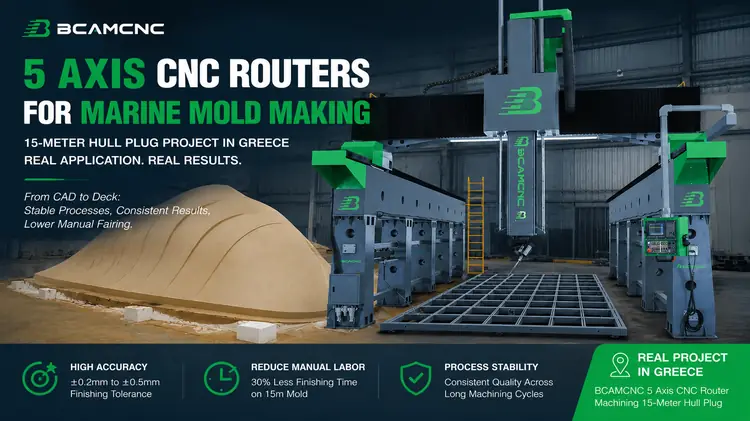
A compact 5 axis CNC router designed for smaller components has different structural and manufacturing requirements from a large-format machine used for boat molds or automotive prototypes.
Larger machines may require more substantial frames, longer motion systems and additional installation considerations.
What buyers should consider: Choose the working area according to your actual part dimensions, rather than automatically selecting the largest available machine.
2. Machine Structure and Rigidity
Two machines with similar working areas may have very different mechanical structures.
Machine bed construction, gantry design, manufacturing processes and motion components all contribute to production cost.
For large molds and complex 3D parts, structural stability becomes particularly important during long machining cycles.
A lower initial price may be attractive, but buyers should also consider how the machine is designed for their intended workload.
The key point: Compare machine construction and application suitability, not just dimensions and weight.
3. Five-Axis Head and Spindle Configuration
The five-axis machining head is another important part of the overall machine cost.
Different configurations may offer different spindle characteristics, rotary-axis arrangements, tool access and application capabilities.
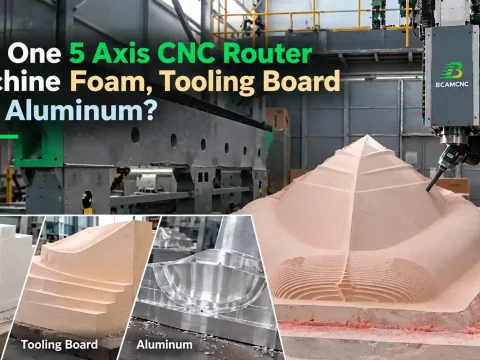
For example, machining large EPS foam molds may involve different cutting requirements from processing denser tooling boards or composite materials.
A more expensive configuration is not necessarily the best choice for every application.
What matters most: The spindle and five-axis head should match your materials, part geometry and production requirements.
4. CNC Controller and Software Compatibility
The CNC control system also influences machine pricing.
Different controllers can vary in functionality, programming requirements, user interface and integration capabilities.
For five-axis machining, compatibility between the controller, CAM software and post processor is particularly important.
Before purchasing, buyers should confirm whether their existing programming workflow can be used with the proposed machine.
A useful question to ask: What controller, CAM compatibility and post-processing support are included in the quotation?
5. Customization and Additional Equipment
Not every factory needs the same machine configuration.
Depending on the application, buyers may require different working dimensions, tool-changing arrangements, dust extraction solutions or other supporting equipment.
These choices can change the final quotation.
However, adding more options does not automatically improve production efficiency.
A better approach: Start with the parts you manufacture and select the configuration that supports your actual production process.
6. Shipping, Installation and After-Sales Support
The machine price is not always the total purchasing cost.
International buyers should also consider shipping, import duties, installation, operator training and future maintenance.
When comparing suppliers, it is important to understand exactly what is included in each quotation.
A lower equipment price may not represent a lower overall investment if essential services or equipment are quoted separately.
How to Compare 5 Axis CNC Router Prices
Instead of comparing only the final price, evaluate what each supplier is offering.
| Comparison Factor | What to Check |
|---|---|
| Working Area | X/Y/Z travel and usable machining space |
| Machine Structure | Bed, gantry and mechanical construction |
| Five-Axis Head | Rotary configuration and tool accessibility |
| Spindle | Power, speed and material suitability |
| CNC Controller | Controller model and CAM compatibility |
| Additional Equipment | Tool changer, extraction and other options |
| Service | Installation, training, warranty and support scope |
The cheapest quotation is not always the most economical solution. The right investment depends on whether the machine can reliably meet your production requirements.
Choosing the Right 5 Axis CNC Router with BCAMCNC
BCAMCNC offers 5 axis CNC router solutions for applications including foam molds, tooling board, composite materials and large 3D components.
Different applications require different machine configurations. For this reason, selecting a machine should begin with the workpiece rather than a fixed specification list.
If you are comparing 5 axis CNC router prices, send BCAMCNC your part dimensions, material, 3D model and production requirements.
Our team can discuss suitable machine configurations and prepare a quotation based on your project.
The goal is not simply to buy a cheaper 5 axis CNC router, but to choose a machine that fits your production needs and investment plan.
Frequently Asked Questions
Why are some 5 axis CNC routers much more expensive than others?
Price differences may come from machine size, structural design, five-axis head configuration, CNC controller, components and included services.
Does a larger 5 axis CNC router always cost more?
Larger working dimensions generally increase manufacturing requirements, but the final price also depends on machine structure, components and configuration.
Is a cheaper 5 axis CNC router worth buying?
It depends on the application. Buyers should compare machining capability, component specifications, service scope and total purchasing cost rather than price alone.
How can I get an accurate 5 axis CNC router quotation?
Provide your material, workpiece dimensions, 3D drawings, machining requirements and expected production volume. These details help suppliers recommend a suitable configuration.