
 Moving from conventional routing to five-axis machining introduces new decisions at the machine. Workpiece positioning, tool orientation, and clearance around the machining head all affect how a job should be prepared. Understanding these relationships is an important step toward using five-axis capability in production.
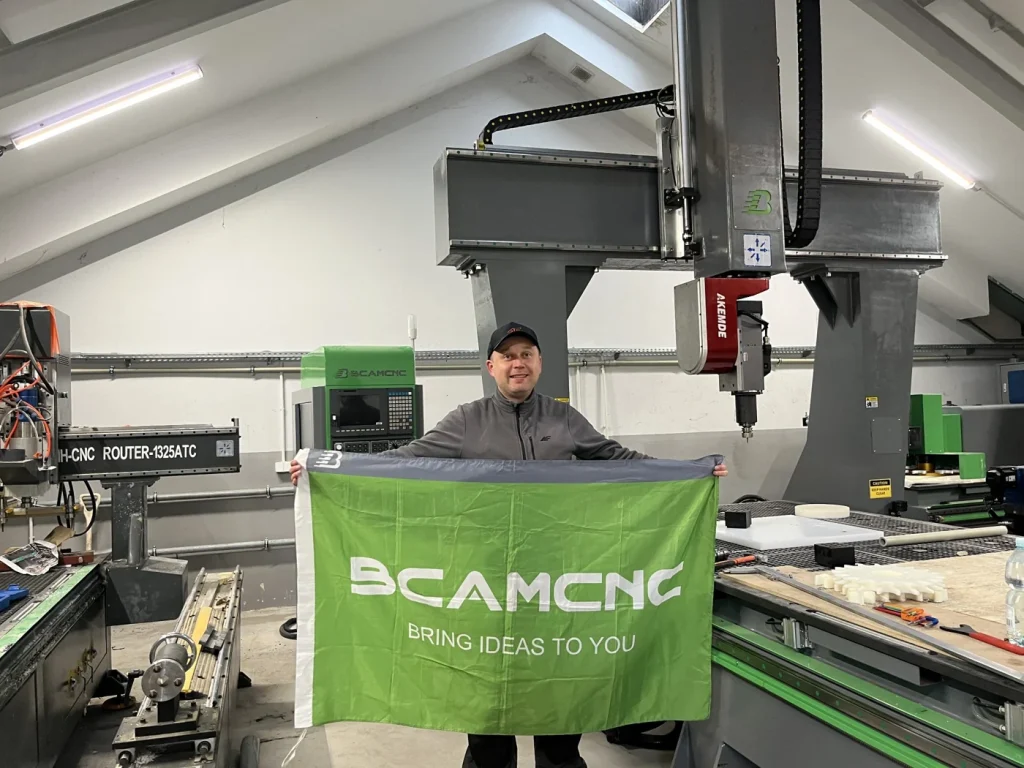
At a customer’s workshop in Poland, BCAMCNC provided onsite technical support for a D Series 5 Axis CNC Router, focusing on machine familiarization and trial machining. The visit brought practical setups and multi-angle demonstrations together, helping explain how machine movement relates to the workpiece and its surroundings.
The Practical Challenge: Tool Access and Clearance
When a machining head tilts, the cutter’s approach changes. Operators must consider the space occupied by the tool holder and head, alongside the cutting tool itself.
A toolpath therefore needs to work with the complete physical setup. Fixtures, material, and nearby obstacles must remain clear throughout the planned movement. An inclined approach may improve access to a feature, but it also changes the clearance required around the workpiece.
The onsite session addressed these considerations directly at the customer’s machine, connecting operating concepts with the actual workshop setup.
Exploring Multi-Angle Machining with the D Series
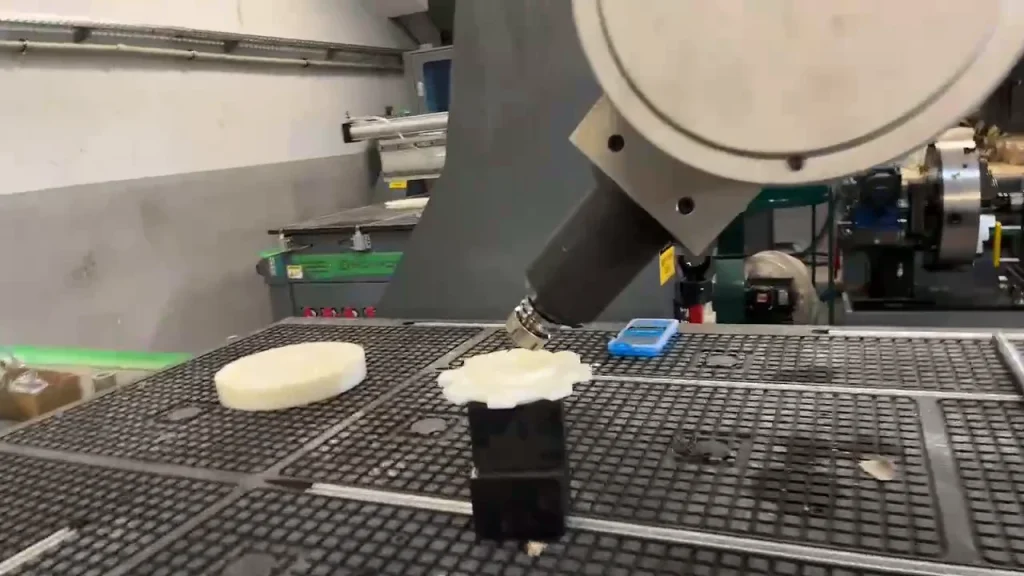
The BCAMCNC D Series combines linear axis movement with changes in machining-head orientation. This enables the cutter to approach suitable workpiece features from different angles.
During the Poland trials, the head was demonstrated in upright and inclined positions around a white, gear-shaped sample. Its clearly defined profile provided a useful reference for observing head orientation, tool position, and the space around the setup.
A circular blank was also present on the worktable. Together, these trial pieces supported a practical discussion of workpiece placement and machining access before progressing to more demanding applications.
Onsite Technical Support at the Machine
Machine familiarization
The walkthrough covered the working area and machining-head arrangement. Reviewing these elements at the equipment helped relate machine operation to the customer’s own workshop environment.
Workpiece setup
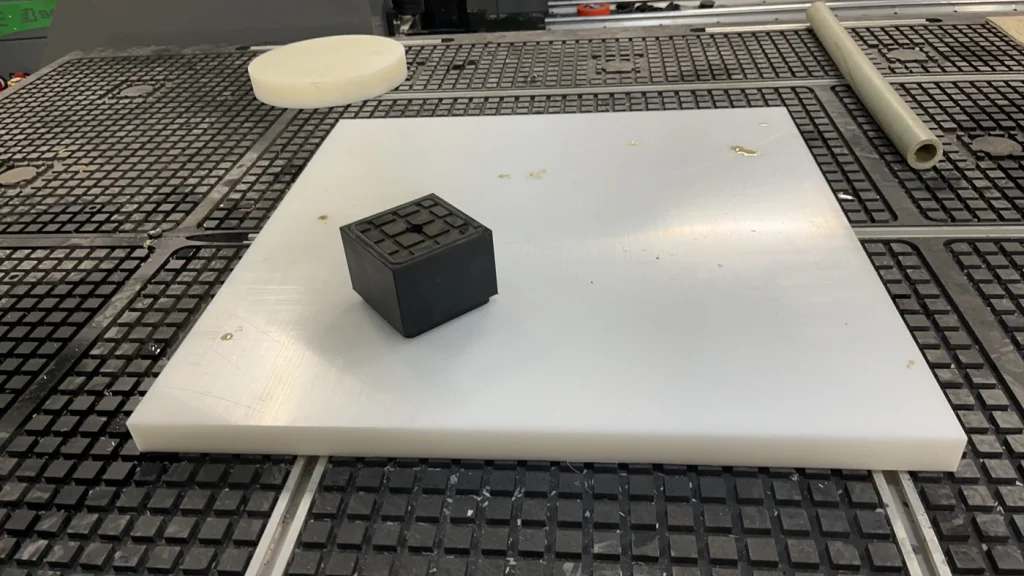
The trial pieces provided reference points for reviewing positioning and the surrounding working space. This kept the discussion focused on the relationship between the part, the tool, and the machine.
Head orientation and clearance
Demonstrations in upright and inclined positions helped explain how the machining head occupies different areas as its orientation changes. This is an important consideration when preparing a multi-angle CNC machining operation.
What the Onsite Trials Established
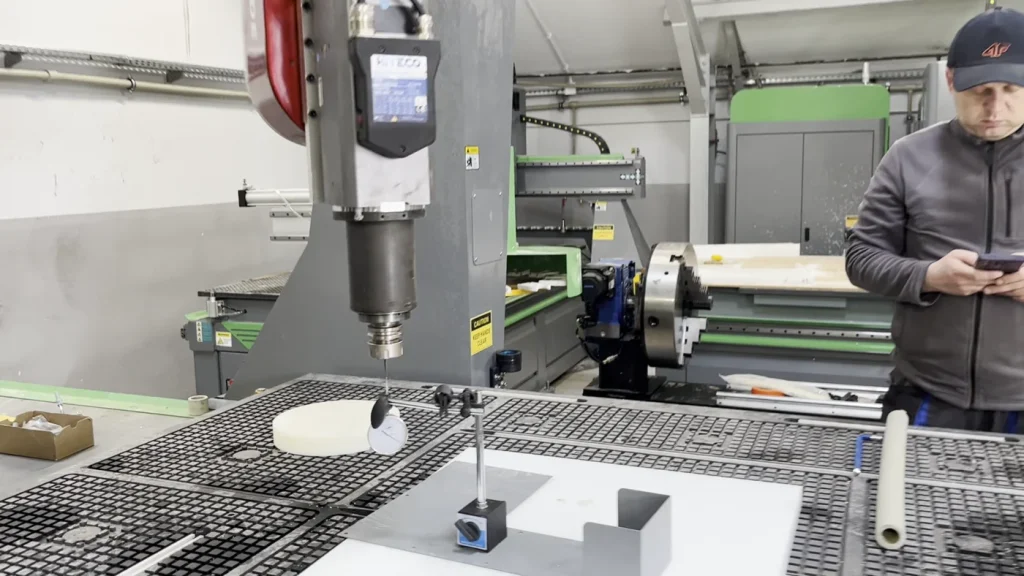
The session provided a practical reference for understanding the D Series machine’s movement and the trial setup. The customer could observe different head positions at the machine and review how those positions affected access around the sample.
This stage supports subsequent application development. Before introducing a new production part, its geometry, tooling, workholding, and machining program still need to be considered together. The trial setup offers a starting point for that process.
Questions About Onsite Five-Axis Support
What did the Poland visit cover?
The visit focused on machine familiarization, trial workpiece setups, and demonstrations of upright and inclined machining-head positions.
Why use trial parts before production?
Trial machining helps operators review tool movement, workholding, and clearance before applying a setup to production parts. It also provides an opportunity to identify questions that may be less obvious when reviewing a program alone.
What information helps prepare an application discussion?
Part drawings or a 3D model, material details, workpiece dimensions, and the required machining operations help define the discussion. Tool access and fixture arrangements can then be reviewed around the intended application.
Planning a Five-Axis CNC Application
The Poland project illustrates the role of practical technical support when introducing a 5 axis CNC router into a workshop. Machine familiarization and trial setups help connect equipment capability with the decisions required at the worktable.
For manufacturers considering a BCAMCNC D Series machine, the next step is to review the intended parts and machining requirements. This gives equipment selection, setup planning, and technical support a clear application to work toward.