
Not all five-axis CNC machines work in the same way. Some use 3+2 axis positioning, while others support simultaneous five-axis machining.
Although both use five machine axes, their movement methods and machining capabilities are different.
For manufacturers working with large molds, complex curved surfaces, and composite materials, understanding these differences helps when selecting the right CNC router.
1. What Is 3+2 Axis CNC Machining?
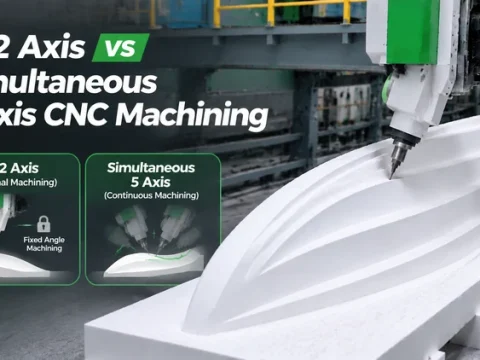
3+2 axis machining, also known as positional five-axis machining, uses two rotary axes to position the cutting tool at a selected angle.
Once the required angle is reached, the rotary axes remain fixed while the X, Y, and Z axes perform the cutting operation.
Main characteristics:
- The rotary axes position the tool before machining.
- The cutting process uses three linear axes.
- Different machining angles can be selected for separate operations.
- Suitable for multi-sided parts and angled surfaces.
This method works well for components with several defined machining faces that do not require continuous tool orientation changes.
2. What Is Simultaneous 5 Axis CNC Machining?
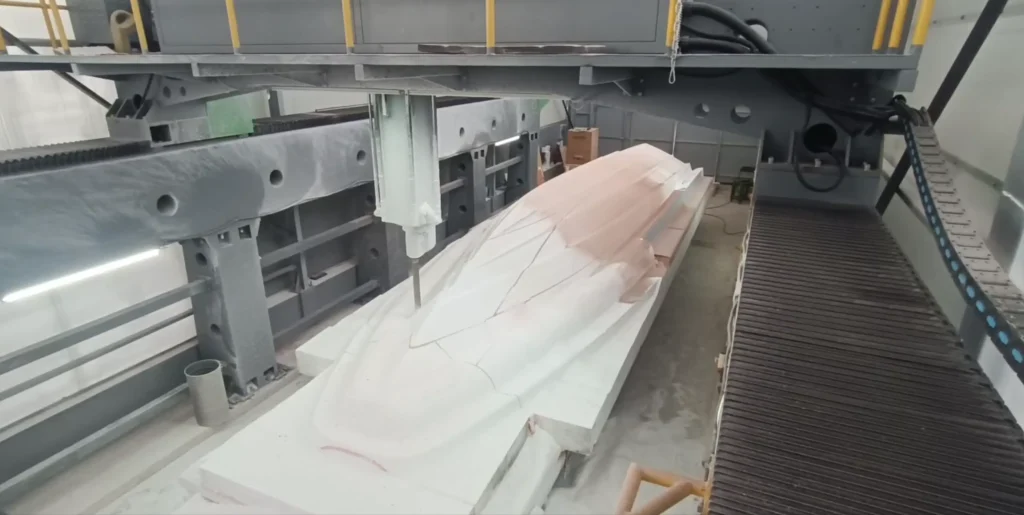
Simultaneous five-axis machining allows all five axes to move together during cutting.
The X, Y, and Z axes control tool position, while the two rotary axes continuously adjust the cutting tool’s orientation along the programmed path.
This provides greater flexibility when machining complex three-dimensional surfaces.
Main characteristics:
- All five axes can move simultaneously.
- Tool orientation changes continuously during machining.
- Suitable for complex curved surfaces and deep cavities.
- Can reduce certain repositioning operations.
This technology is particularly useful for boat hull molds, automotive models, aerospace tooling, and other complex industrial components.
3. 3+2 Axis vs Simultaneous 5 Axis: Key Differences
| Comparison | 3+2 Axis | Simultaneous 5 Axis |
|---|---|---|
| Rotary axis movement | Fixed during cutting | Continuous movement possible |
| Tool orientation | Selected angle | Continuously adjustable |
| Complex curved surfaces | More limited | More flexible |
| Multi-angle machining | Suitable | Suitable |
| Programming | Generally simpler | More complex |
| Typical applications | Multi-sided parts | Complex molds and surfaces |
Neither method is automatically better for every application. The right choice depends on workpiece geometry and machining requirements.
4. When Is Simultaneous 5 Axis Machining More Suitable?
For complex industrial applications, continuous tool orientation offers important advantages.
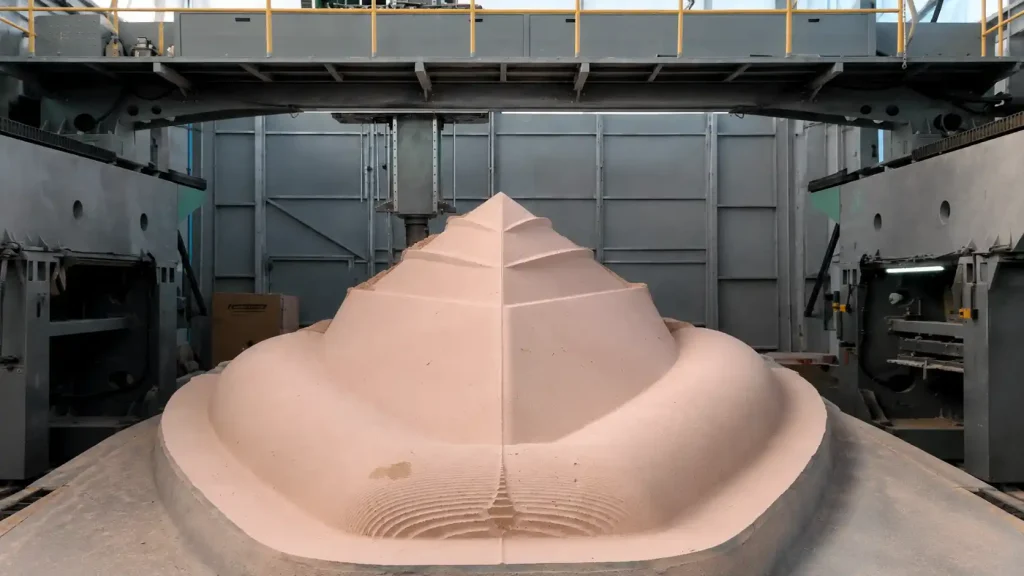
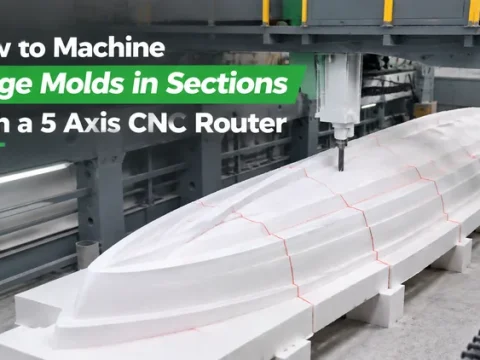
Large boat hull molds contain continuously changing curved surfaces. Simultaneous five-axis machining allows the cutting tool to follow these geometries with adjustable tool angles.
Automotive Mold Manufacturing
Automotive models and molds often include compound curves, deep sections, and complex transitions that benefit from flexible tool orientation.
Composite Tooling
Aerospace and industrial composite components frequently require machining of complex surfaces and different cutting angles.
Large Industrial Models
For oversized molds and patterns, simultaneous five-axis machining provides more flexibility when processing complex geometries.
5. What Should You Check When Buying a 5 Axis CNC Router?
A machine advertised as five-axis does not necessarily support simultaneous five-axis machining.
Before purchasing, check the following:
- CNC Controller: Does it support continuous five-axis interpolation?
- RTCP Function: Can it maintain the programmed tool center position during rotary movement?
- CAM Software: Is the post processor compatible with the machine’s five-axis kinematics?
- Machine Structure: Does the machine suit your materials and machining requirements?
- Machining Demonstration: Can the manufacturer demonstrate actual continuous five-axis cutting?
These factors help buyers understand the machine’s real machining capabilities.
6. BCAMCNC Simultaneous 5 Axis CNC Router Series
BCAMCNC offers five series of simultaneous five-axis CNC routers for different industrial applications.
- CE Series: Cost-effective five-axis machining for general applications and soft materials.
- D Series: Higher-rigidity configuration for tooling board, composites, aluminum, and complex machining.
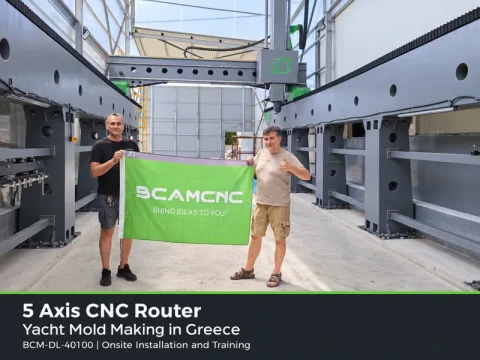
- DL Series: Large-format machining for oversized molds, boat hull patterns, and deep cavities.
- DP Series: Large foam workpieces and lightweight material processing.
- F Series: Shaped solid wood components and complex furniture parts.
All five series support continuous five-axis machining. The appropriate configuration depends on workpiece dimensions, material, and production requirements.
Frequently Asked Questions
Is simultaneous five-axis machining better than 3+2 machining?
For complex curved surfaces, simultaneous five-axis machining offers greater tool-orientation flexibility. For simpler multi-sided parts, 3+2 machining can be an effective solution.
Does RTCP mean a machine supports simultaneous five-axis machining?
Not necessarily. The CNC controller, machine configuration, and CAM post processor must also support continuous five-axis movement.
Is simultaneous five-axis machining always faster?
No. It can reduce certain setups and improve tool accessibility, but machining time also depends on programming, tools, material, and cutting strategy.
Final Thoughts
The main difference between 3+2 axis and simultaneous five-axis machining is how the rotary axes operate during cutting.
While 3+2 machining uses fixed tool orientations, simultaneous five-axis machining allows continuous adjustment of the cutting tool.
For manufacturers producing large molds, boat hull patterns, automotive models, and composite tooling, simultaneous five-axis machining offers greater flexibility for complex applications.
Looking for a true simultaneous 5 axis CNC router? Contact BCAMCNC to discuss your machining requirements.