Trimming, Drilling and Cutouts After Molding
Edge Trimming and Contour Cutting
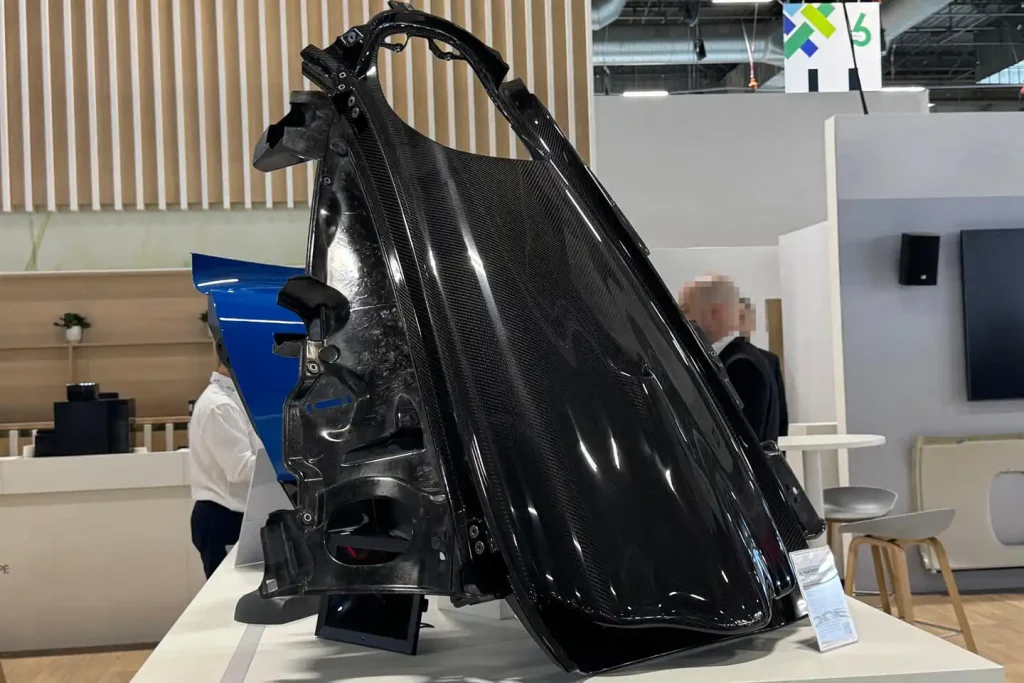
Remove excess material around molded edges and machine the final component outline. Follow curved profiles and changing edge angles with a suitable cutting approach.
Openings, Slots and Cutouts
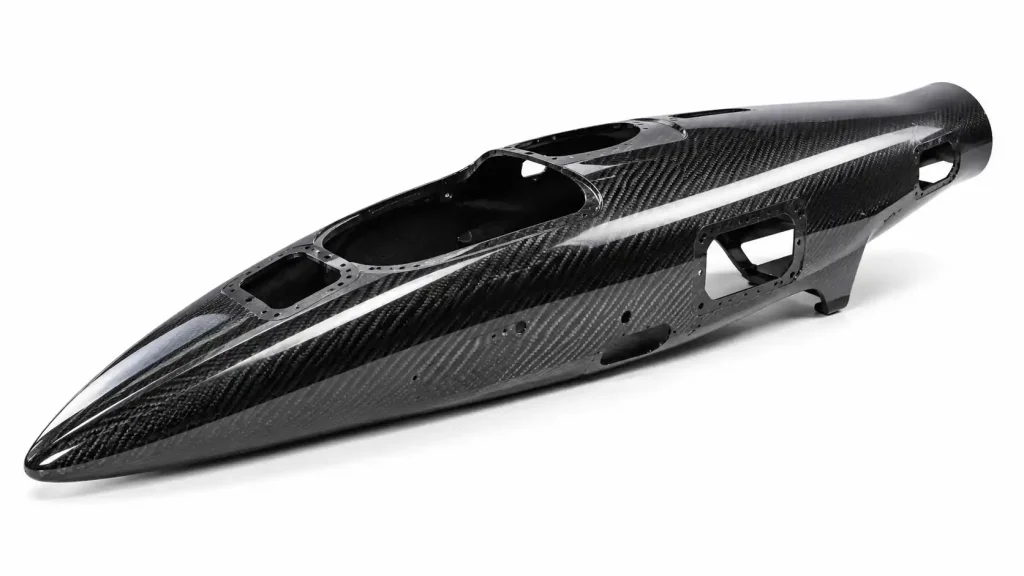
Machine access openings, slots, and assembly features in formed panels, covers, and shells.
Drilling on Different Faces
Produce holes on inclined surfaces and different faces of a component. Tool orientation and local support are planned around the hole position and laminate construction.
Composite Machining Demonstration
See the component shape, tool approach, and finished edge or hole detail. Compare examples with your own material, laminate thickness, and required operation.
Five Axis Access Around Large and Curved Components
Reach Inclined and Recessed Features
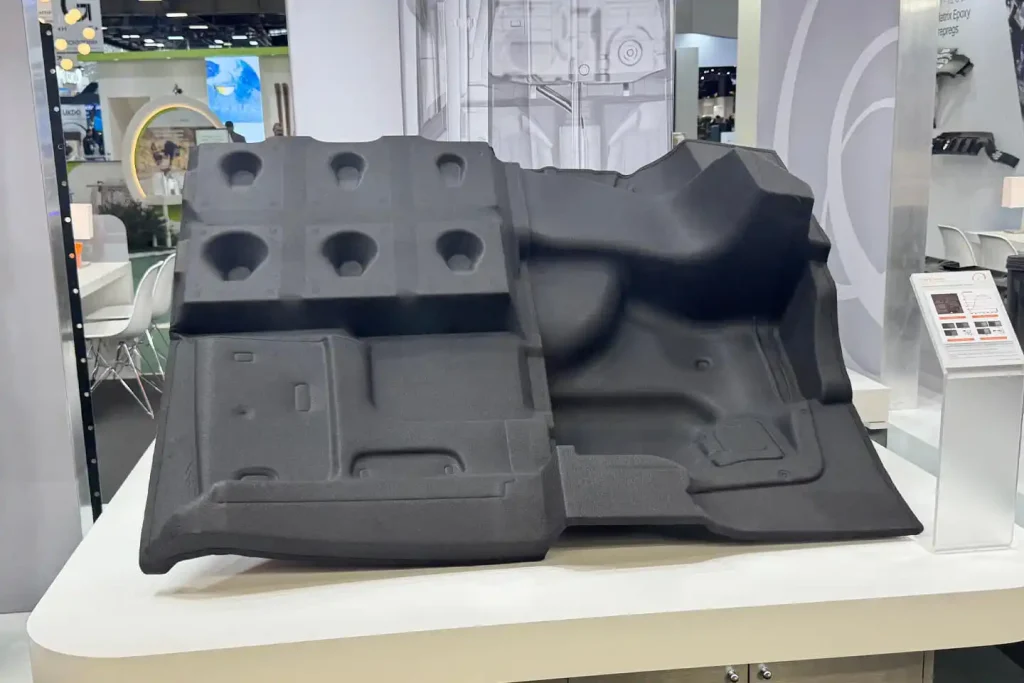
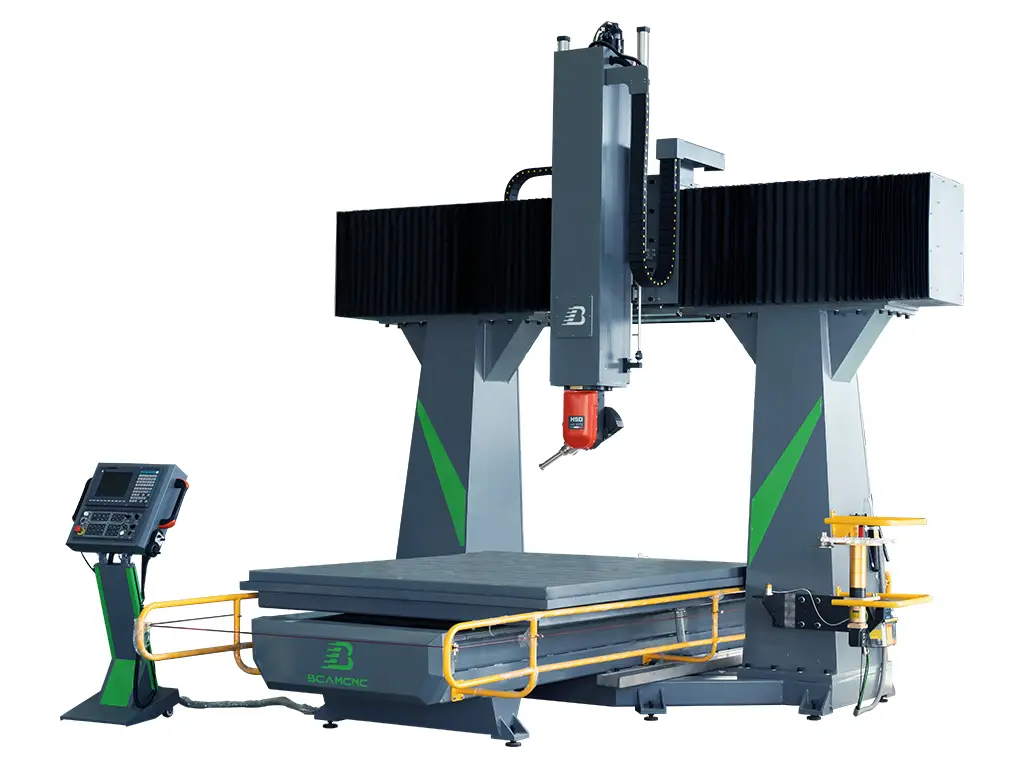
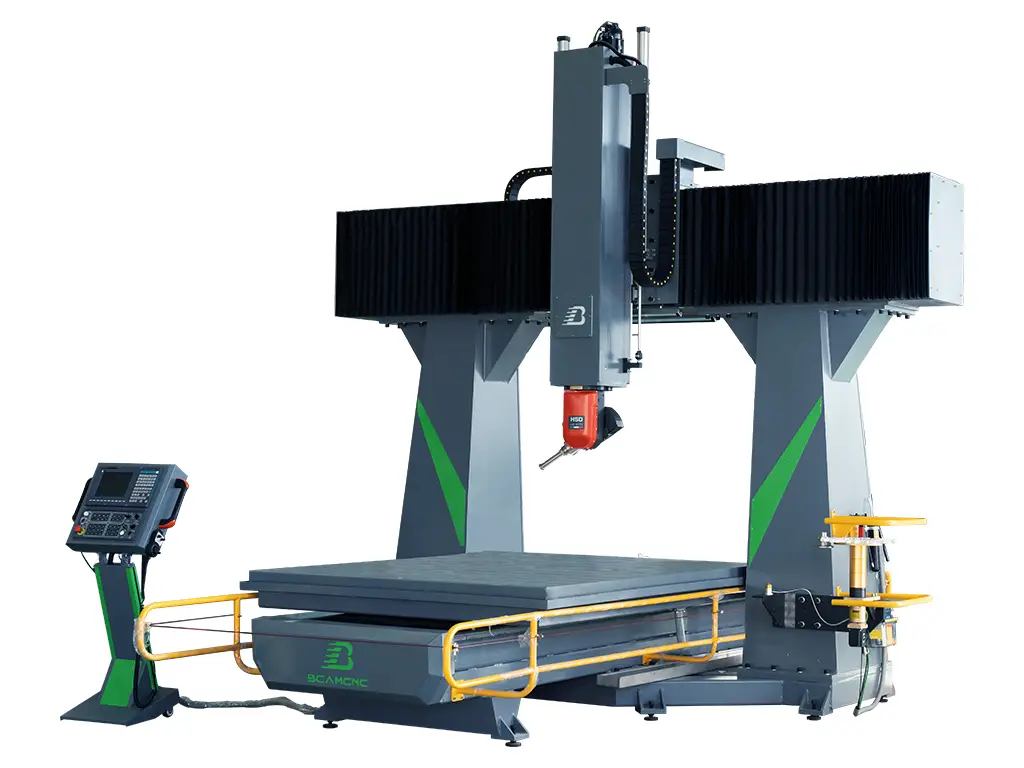
Five-axis movement changes the tool approach around curved panels, raised sections, and angled walls. Access depends on the component geometry and available clearance.
Reduce Repeated Handling
Where the part and fixture permit, accessible features can be combined in one setup, reducing repositioning and alignment between operations.
Combine Different Cutting Operations
Automatic tool changing supports trimming and drilling tools within the machining program. RTCP compensates for rotary-axis movement to maintain the programmed tool-center position.
Materials and Composite Part Construction
| Material |
Typical Operations |
Process Focus |
| Carbon fiber reinforced polymer, CFRP |
Edge trimming, drilling, and cutouts |
Laminate layup, tool wear, edge quality, and conductive dust |
| Glass fiber reinforced polymer, GFRP |
Trimming, openings, and contour cutting |
Laminate thickness, abrasive wear, support, and extraction |
| Sandwich panels |
Edge profiling, openings, and drilling |
Face sheets, core construction, bonding, and local support |
Honeycomb-core components require a separate review of the face sheets, core material, support method, and cutting operation.
Tooling, Workholding and Dust Management
Cutting Tools for the Material
Cutter geometry, coating, and cutting conditions are selected for the laminate and operation. Tool condition is particularly important when machining abrasive fibers.
Support Near the Cutting Area
Workholding must locate the component securely and support thin or flexible areas. Fixture design should provide cutting access while limiting part movement.
Dust Collection and Machine Protection
Extraction requirements depend on the material and cutting process. CFRP applications also require attention to conductive dust and electrical equipment protection.
The project proposal identifies which tools, fixtures, extraction equipment, and protective measures are supplied by BCAMCNC and which are provided by the customer.
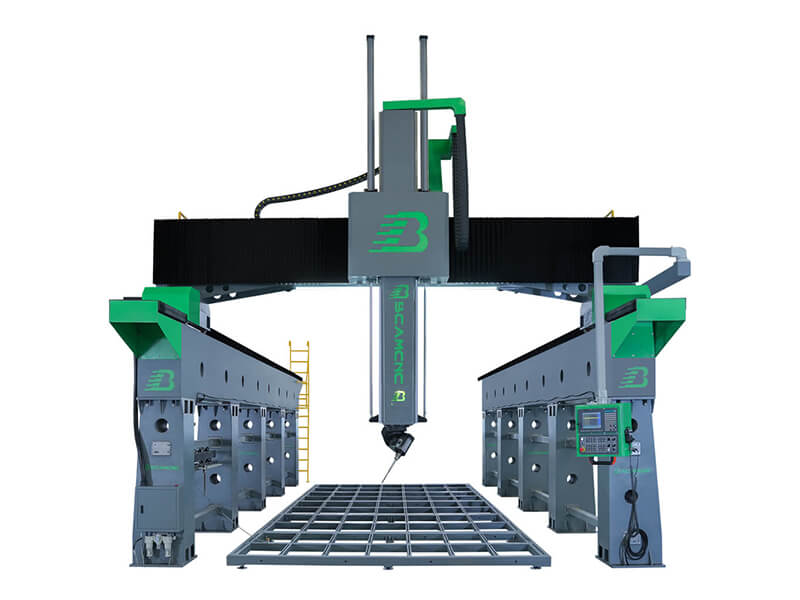
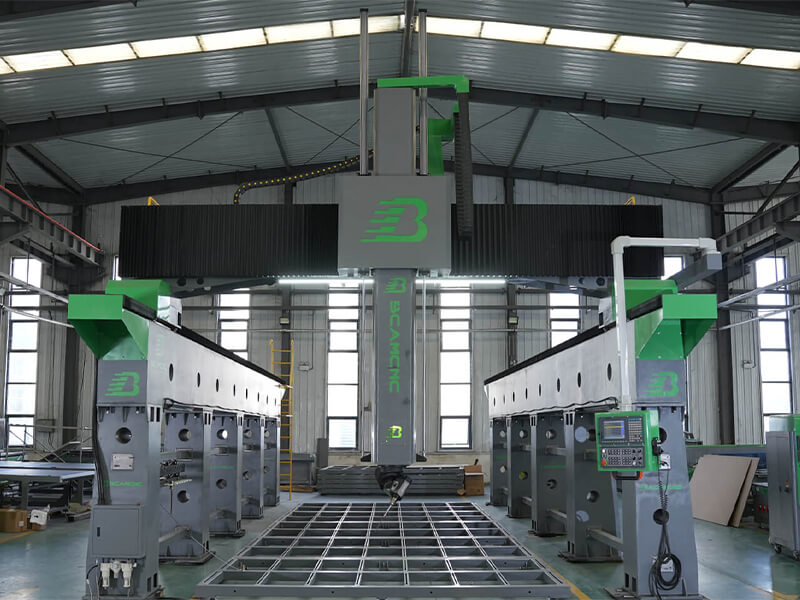
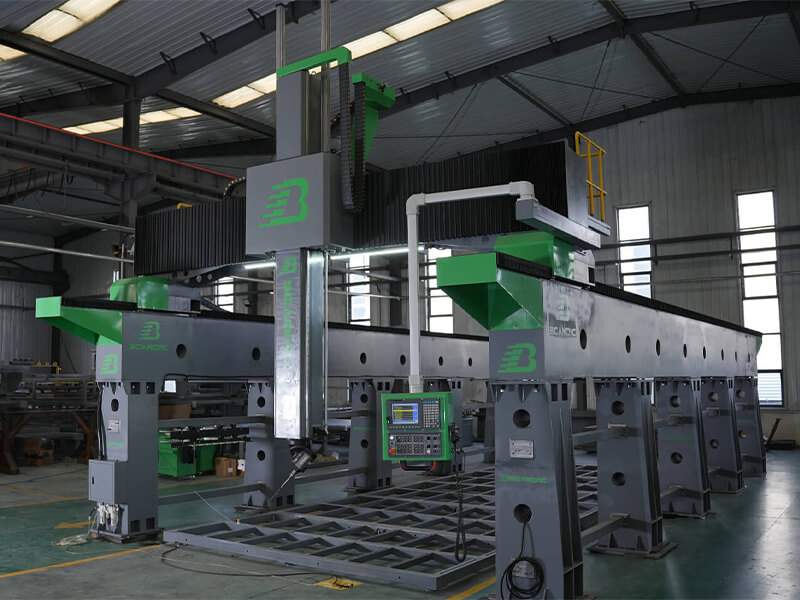
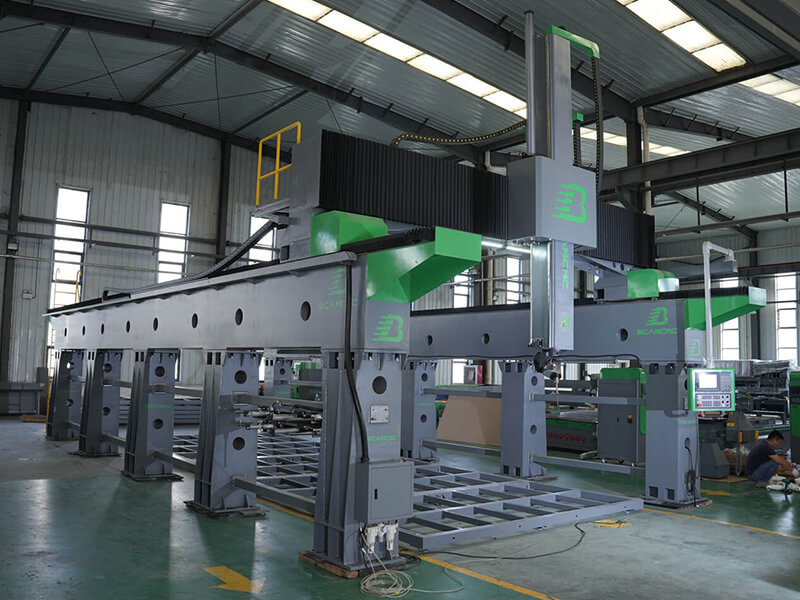
DL Series Configuration for Composite Machining
| Equipment |
Proposed Configuration |
| Machine series |
BCAMCNC DL Series |
| Five-axis machining |
Simultaneous movement with RTCP |
| Spindle |
HITECO spindle |
| CNC control |
Syntec control system |
| Axis drives |
Yaskawa servo system |
| Tool changing |
Automatic tool changer |
| Working dimensions |
Selected for the component, fixtures, and tool access |
| Workholding |
Fixture requirements and supply scope confirmed per project |
| Dust management |
Extraction and protection requirements confirmed per application |
Final configuration follows a review of the material, component geometry, and required operations. The technical quotation lists working travel, spindle specifications, tool capacity, included equipment, and optional items.
View DL Series Sizes, Specifications and Main Components
Get a Composite Machining Quote
Start with Your Part, Material and Required Operations
Send three details to begin:
- Material and construction: fiber type, laminate thickness, resin system, and core details where applicable.
- Part dimensions: maximum length, width, and height.
- Machining requirements: trimming, drilling, openings, tolerances, and required edge condition.
Photographs and approximate dimensions are enough for an initial discussion. CAD files and sample material help refine the tooling, fixture, and process recommendations.
Installation, Training and Technical Support
BCAMCNC provides installation planning, commissioning, operator training, and technical support according to the agreed project scope.
Planning covers workshop layout, electrical supply, loading access, workholding, and extraction arrangements. Training can include machine operation, setup, routine maintenance, and troubleshooting.
Common Questions About Composite CNC Machining
What affects edge quality when machining composites?
Edge quality depends on the laminate, cutter geometry, tool condition, cutting parameters, and support near the cut. Five-axis access helps position the tool for the required operation.
Can one configuration machine both CFRP and fiberglass?
Potentially, with material-specific tooling and process settings. Extraction, machine protection, and part support must also suit each application.
Can the machine process honeycomb sandwich panels?
Suitability depends on the face sheets, core material, bonding, and required operation. Panel details and sample cutting may be needed to establish the process.
Can the DLP Series also machine molds and patterns?
The DLP Series can be configured for foam, tooling board, and suitable cured resin models and tooling. See our mold-making applications or boat mold machining applications.
Can I use my existing CAD/CAM software?
It must support the required five-axis toolpaths and a suitable postprocessor for the selected machine and controller.
Get a Configuration and Quote for Your Composite Part
Looking for a 5 axis CNC router for composite machining? Send your material construction, maximum part dimensions, and required operations.
BCAMCNC will review your project and prepare a proposed machine configuration, supporting equipment scope, and pricing.
Get a Composite Machining Quote















Reviews
There are no reviews yet.